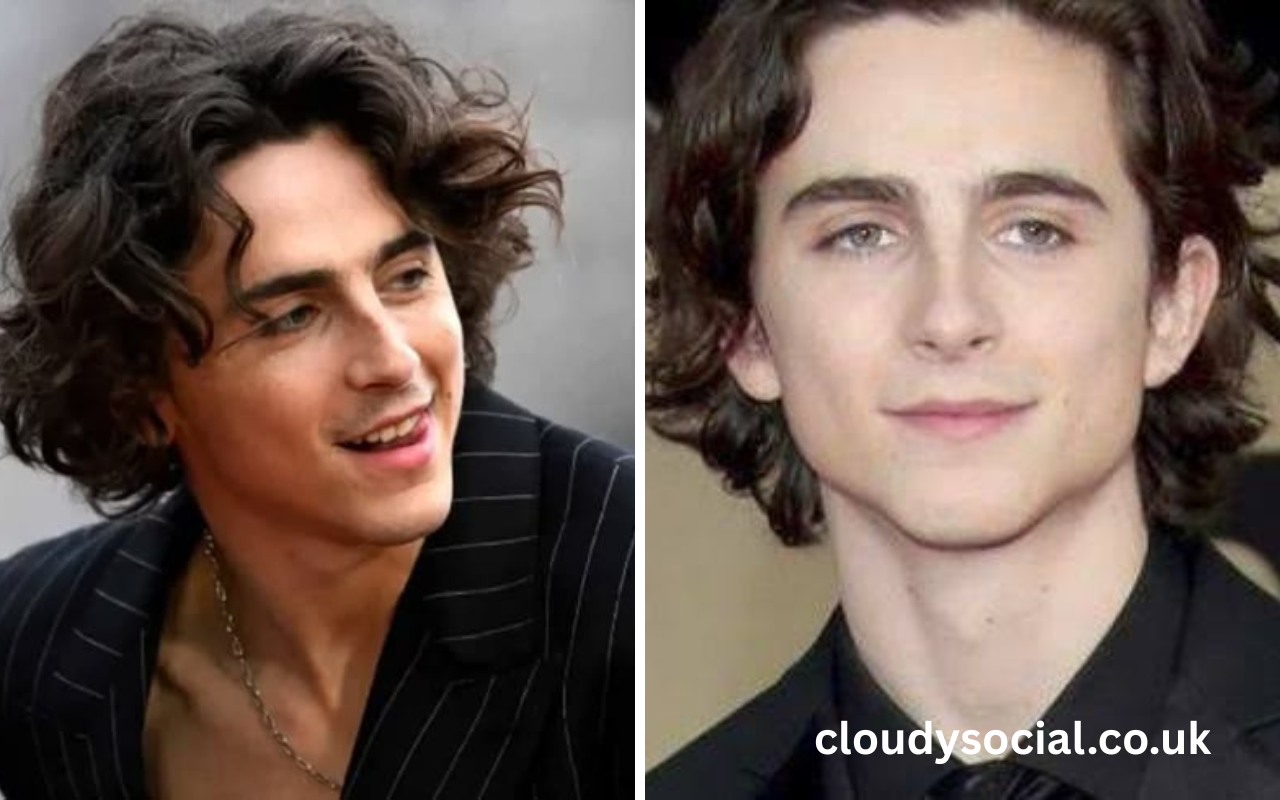
The name “Timothy Shalloway” appears frequently in online searches, entertainment discussions, social-media posts, and celebrity-related articles. However, Timothy Shalloway is not the recognized professional name of a separate Hollywood actor. In most cases, people who search for this name are looking for Timothée Chalamet, the American-French actor known for films such as Call Me by Your Name, Dune, Wonka, Little Women, and A Complete Unknown.
“Timothy Shalloway” is essentially an English phonetic interpretation or misspelling of Timothée Chalamet. Because the actor’s French name can be difficult for some English speakers to pronounce or spell, several alternative versions have appeared online. These include Timothy Chalamet, Timothee Shalame, Timmy Shalloway, Timothy Shalame, and Timothy Shalloway. Although these versions may be common in search engines, his correct name is Timothée Hal Chalamet.
Timothée Chalamet has become one of the most recognizable actors of his generation. His career is notable for its combination of independent dramas, literary adaptations, historical films, science-fiction blockbusters, musicals, and biographical performances. He has also attracted attention for his international background, fashion choices, private personality, and ability to move between serious character-driven roles and major commercial productions.
Who Is Timothy Shalloway?
When people use the keyword “Timothy Shalloway,” they are usually referring to Timothée Chalamet. He was born on December 27, 1995, in Manhattan, New York City. His full birth name is Timothée Hal Chalamet. He possesses both American and French citizenship because his father is French and his mother is American.
Chalamet grew up in an artistic and culturally diverse environment. He was raised primarily in Manhattan Plaza, a residential complex in the Hell’s Kitchen neighborhood of New York City. Manhattan Plaza has historically been associated with actors, musicians, dancers, writers, and other people working in creative professions. Growing up in such surroundings exposed him to the performing arts from an early age.
His childhood was divided between American and French cultural influences. He spent time in France during his early life and developed fluency in both English and French. This bilingual and bicultural background later became an important part of his public identity. It also gave him the ability to appear in interviews and promotional events in both languages.
The actor is commonly called Timmy by friends, colleagues, fans, and members of the media. His first name, Timothée, is the French form of Timothy. This connection partly explains why “Timothy” is regularly used when English speakers discuss him.
How to Pronounce Timothée Chalamet
The pronunciation of Timothée Chalamet is one of the main reasons the keyword “Timothy Shalloway” became popular. His name is generally pronounced in French as “Tee-mo-TAY Shala-MAY.” In English-speaking interviews, people often pronounce the first name more like “Timothy” and the surname as “Shala-may.”
Chalamet has shown a relaxed attitude toward the different ways people pronounce his name. He has acknowledged that many Americans call him Timmy or Timothy. This flexibility has made the name less intimidating to audiences, but it has also contributed to the growth of incorrect spellings.
The spelling “Shalloway” most likely comes from people attempting to write the surname according to how it sounds. Nevertheless, “Chalamet” remains the correct spelling. Anyone searching for reliable information, official film credits, interviews, or award records should use the name Timothée Chalamet.
Timothée Chalamet’s Family Background
Timothée Chalamet comes from a family with connections to the arts, media, culture, and public service. His mother, Nicole Flender, has worked as a real-estate agent and previously trained and performed as a dancer. She has a background in theater and the performing arts, which helped create an artistic environment within the family.
His father, Marc Chalamet, is French and has worked as an editor and writer. His French heritage played an important role in Timothée’s upbringing. Through his father, Chalamet maintained a connection with France and spent portions of his childhood in the country.
Timothée has an older sister named Pauline Chalamet. Pauline is an actor, writer, director, and producer. She is widely recognized for her work in television and independent entertainment projects. The siblings have occasionally spoken positively about one another, although they generally maintain separate professional identities.
Chalamet is also connected to creative professionals through his extended family. These family influences helped make acting and performance feel like realistic career possibilities rather than distant ambitions.
Despite his public fame, Chalamet has often kept detailed family matters private. His relatives sometimes accompany him to important events, but he does not regularly build his public image around family exposure. This separation has allowed him to protect parts of his personal life while maintaining a highly visible career.
Childhood and Early Interest in Acting
Timothée Chalamet became interested in acting while growing up in New York City. Before becoming a professional film actor, he appeared in commercials and participated in school productions. His early exposure to television, theater, and performance helped him develop confidence in front of an audience and a camera.
One of the most important influences on his decision to pursue acting was his experience watching Heath Ledger’s performance as the Joker in Christopher Nolan’s The Dark Knight. Chalamet has discussed the impact of strong screen performances on his ambition to become a serious actor.
His early career did not begin with instant international success. Like many young performers, he took small parts, television appearances, advertisements, and supporting roles. These experiences allowed him to understand professional sets, casting processes, rehearsal methods, and the practical demands of acting.
New York provided him with access to auditions and training opportunities. At the same time, he had to balance acting with schoolwork and ordinary teenage experiences. This combination of professional exposure and formal education helped shape his disciplined approach to later roles.
Education and Performing-Arts Training
Chalamet attended Fiorello H. LaGuardia High School of Music & Art and Performing Arts in New York City. The school is well known for educating students interested in acting, dance, music, visual arts, and other creative disciplines.
His time at LaGuardia was particularly important to his development. He participated in school productions and received encouragement from teachers who recognized his acting potential. The competitive but creative atmosphere helped him take performance more seriously.
After graduating from high school, Chalamet enrolled at Columbia University. He studied cultural anthropology, but balancing a traditional university schedule with a growing acting career proved difficult. He later transferred to New York University’s Gallatin School of Individualized Study, which offered greater academic flexibility.
As professional opportunities increased, acting became his main focus. His educational background nevertheless remained relevant to his career. His interest in culture, literature, history, and identity can be seen in many of the projects he has selected.
Timothée Chalamet’s Early Television Career
Before becoming a major film star, Timothée Chalamet appeared in several television productions. One of his early screen appearances was in an episode of Law & Order. He also appeared in the television film Loving Leah and had a role in the series Royal Pains.
A more substantial television opportunity arrived when he joined the cast of Homeland. He played Finn Walden, the son of the fictional vice president. Although the role was not the central focus of the series, it gave Chalamet exposure to a respected dramatic television production.
Working on television taught him how to deliver performances within tight production schedules. It also gave casting directors and filmmakers an opportunity to observe his dramatic ability.
Chalamet eventually shifted his attention primarily toward cinema. Unlike some actors who remain closely associated with television, he built his international reputation through feature films. His early television work, however, remains an important part of his professional development.
First Film Roles and Interstellar
Timothée Chalamet’s early film career included supporting roles in projects such as Men, Women & Children. He was still establishing himself and was not yet treated as a major box-office name.
One of his most widely seen early performances came in Christopher Nolan’s 2014 science-fiction film Interstellar. Chalamet played the younger version of Tom Cooper, the son of Matthew McConaughey’s character. Casey Affleck portrayed the adult version of Tom.
Although Chalamet’s screen time in Interstellar was limited, appearing in a major Christopher Nolan production gave him valuable exposure. The film featured an established cast and reached a global audience. Chalamet later expressed disappointment that more of his material did not appear in the final version, but the experience remained an important step in his career.
He continued appearing in smaller films after Interstellar. These projects included independent dramas that allowed him to explore more complex and emotionally demanding characters.
Breakthrough With Call Me by Your Name
Timothée Chalamet achieved his international breakthrough with Luca Guadagnino’s 2017 film Call Me by Your Name. Based on the novel by André Aciman, the film follows Elio Perlman, a highly intelligent and emotionally sensitive teenager living with his family in northern Italy during the summer of 1983.
Chalamet played Elio opposite Armie Hammer’s character, Oliver. The role required emotional subtlety, musical ability, multilingual dialogue, and a convincing portrayal of first love, longing, confusion, and heartbreak.
His performance received widespread critical praise. Many reviewers highlighted his ability to communicate emotion through facial expressions, physical movement, silence, and small changes in behavior. The film’s final scene, in which Elio sits in front of a fireplace, became one of the most discussed moments of his career.
Chalamet received an Academy Award nomination for Best Actor for the performance. At the age of 22, he became one of the youngest nominees in the history of the category and the youngest Best Actor nominee in several decades.
The film transformed him from a promising young performer into an internationally recognized actor. It also established several qualities that would later define his career: emotional openness, vulnerability, intelligence, and a willingness to take artistically challenging roles.
Lady Bird and the Success of 2017
The year 2017 was especially important for Timothée Chalamet because he also appeared in Greta Gerwig’s Lady Bird. He played Kyle Scheible, a wealthy, detached, and somewhat pretentious teenager who becomes involved with the main character, Christine “Lady Bird” McPherson.
The role was very different from Elio in Call Me by Your Name. Kyle is emotionally distant, self-conscious, and eager to appear intellectually sophisticated. Chalamet’s performance added humor and discomfort to the character without turning him into a simple villain.
Lady Bird became one of the most acclaimed films of the year. Its success further strengthened Chalamet’s reputation and connected him with director Greta Gerwig, who later cast him in another major literary adaptation.
Appearing in both Call Me by Your Name and Lady Bird during the same period demonstrated his range. One role was emotionally intense and deeply romantic, while the other was dry, comedic, and deliberately unlikable.
Beautiful Boy and a Darker Dramatic Role
In 2018, Chalamet starred alongside Steve Carell in Beautiful Boy. The film was based on memoirs written by David Sheff and his son, Nic Sheff. It focused on the emotional effects of addiction on a young man and his family.
Chalamet played Nic, a teenager and young adult struggling with methamphetamine addiction. The role required him to portray physical decline, emotional volatility, relapse, shame, manipulation, love, and vulnerability.
His performance received significant attention and earned him nominations from several major awards organizations. Critics praised the intensity of his acting and his ability to make Nic’s behavior understandable without simplifying the realities of addiction.
Beautiful Boy was an important project because it showed that Chalamet could take on painful contemporary material after the romantic and historical atmosphere of Call Me by Your Name. It also demonstrated his willingness to play characters who are difficult, self-destructive, and emotionally unstable.
The King and Historical Drama
Chalamet took on a very different challenge in the historical drama The King. Inspired by plays by William Shakespeare, the film followed the rise of King Henry V of England.
He played Prince Hal, a young royal who initially avoids political responsibility but is eventually forced to become king. The character must navigate war, manipulation, leadership, friendship, and the moral consequences of power.
The performance required Chalamet to adopt a restrained physical presence and a more controlled speaking style. Rather than relying on the emotional openness associated with some of his earlier roles, he portrayed a young ruler becoming increasingly isolated by authority.
The film also featured actors such as Joel Edgerton, Robert Pattinson, Lily-Rose Depp, Sean Harris, and Ben Mendelsohn. Although reactions to the film varied, Chalamet’s decision to play Henry V showed his interest in historical and literary material.
Little Women and Laurie Laurence
Timothée Chalamet reunited with Greta Gerwig for her 2019 adaptation of Louisa May Alcott’s Little Women. He played Theodore “Laurie” Laurence, the charming and emotionally expressive neighbor who develops close relationships with the March sisters.
The role gave Chalamet an opportunity to combine romance, humor, impulsiveness, sadness, and youthful energy. His chemistry with Saoirse Ronan, who played Jo March, became one of the central elements of the film.
Laurie’s rejected proposal to Jo is one of the story’s most famous scenes. Chalamet portrayed the character’s frustration and heartbreak while preserving the affection between Laurie and Jo.
The film received widespread acclaim for its structure, performances, production design, costumes, and emotional interpretation of Alcott’s novel. Chalamet’s performance introduced him to another generation of viewers and strengthened his association with prestige literary adaptations.
Dune and Global Blockbuster Stardom
Timothée Chalamet entered a new phase of his career when he was cast as Paul Atreides in Denis Villeneuve’s adaptation of Frank Herbert’s science-fiction novel Dune. The first film was released in 2021 after being delayed from its original schedule.
Paul Atreides is the son of Duke Leto Atreides and Lady Jessica. He is a young nobleman who becomes involved in political conflict, religious prophecy, colonial power, warfare, and the struggle for control of the desert planet Arrakis.
The role required Chalamet to lead a large-scale production with complex world-building and an internationally recognized cast. He appeared alongside Rebecca Ferguson, Oscar Isaac, Zendaya, Javier Bardem, Josh Brolin, Jason Momoa, Stellan Skarsgård, and several other prominent actors.
Unlike his earlier independent films, Dune depended on visual effects, extensive location work, action sequences, and large commercial expectations. Chalamet had to maintain the emotional identity of Paul while working within an enormous cinematic world.
The success of Dune elevated him to global blockbuster status. He returned as Paul in Dune: Part Two, released in 2024. The second film explored Paul’s relationship with Chani, his integration with the Fremen, his conflict with House Harkonnen, and his increasingly complicated relationship with power and prophecy.
His performance in the second film was darker and more commanding. Paul changes from an uncertain young survivor into a political and religious leader capable of influencing entire populations. This transformation gave Chalamet one of the most substantial character arcs of his career.
Wonka and His Musical Performance
Chalamet played a younger version of Willy Wonka in the 2023 musical fantasy film Wonka. The character was originally created by author Roald Dahl and had previously been played in major films by Gene Wilder and Johnny Depp.
Rather than directly copying those performances, Chalamet presented Wonka as a hopeful, ambitious, and imaginative young inventor. The story followed his attempts to become a successful chocolatier while confronting corruption and competition.
The role required singing, dancing, comedy, physical performance, and a lighter style than many of his dramatic projects. Chalamet recorded musical numbers for the film and participated in carefully choreographed sequences.
Wonka expanded his appeal to families and younger audiences. It also proved that he could lead a commercially successful musical rather than relying only on intense dramatic roles.
His version of Wonka emphasized optimism and emotional sincerity. This approach allowed the film to function as an origin story while remaining connected to the eccentric qualities traditionally associated with the character.
A Complete Unknown and Playing Bob Dylan
Another major transformation came when Chalamet portrayed musician Bob Dylan in A Complete Unknown. The film focused on Dylan’s emergence in the American folk-music scene and his controversial transition toward electric music.
Playing Dylan required more than physical resemblance. Chalamet had to study Dylan’s voice, posture, mannerisms, musical rhythm, guitar technique, and public personality. He trained extensively and performed songs associated with Dylan.
The role attracted significant attention because Dylan is one of the most influential musicians and songwriters in modern popular culture. Any actor playing him would face close comparison with real footage, recordings, interviews, and public memories.
Chalamet’s performance was praised for capturing elements of Dylan without reducing him to a simple imitation. The film added another musical and biographical achievement to his filmography and resulted in further major award recognition.
Acting Style and Approach to Characters
Timothée Chalamet is known for an acting style that combines emotional sensitivity with physical detail. He frequently portrays young men dealing with identity, ambition, desire, family expectations, power, grief, or personal transformation.
His performances often depend on subtle gestures rather than extended speeches. He uses changes in posture, eye movement, breathing, and facial expression to show what a character is thinking. This technique was particularly visible in Call Me by Your Name, Beautiful Boy, and Little Women.
At the same time, projects such as Dune, Wonka, and A Complete Unknown show that he can adapt his style to larger and more technically demanding productions. In these films, he combines detailed character work with action, music, choreography, or established cultural mythology.
Chalamet has worked with directors including Christopher Nolan, Luca Guadagnino, Greta Gerwig, Denis Villeneuve, Wes Anderson, Adam McKay, David Michôd, James Mangold, and Paul King. His interest in director-led projects suggests that creative collaboration plays an important role in his career decisions.
Awards and Critical Recognition
Timothée Chalamet has received recognition from major film organizations throughout his career. His performance in Call Me by Your Name earned him an Academy Award nomination for Best Actor, along with recognition from the Golden Globes, BAFTA, the Screen Actors Guild, and critics’ organizations.
His work in Beautiful Boy brought additional nominations, particularly in supporting-actor categories. Later performances, including his portrayal of Bob Dylan in A Complete Unknown, returned him to major awards conversations.
Awards are only one measure of his success. Chalamet’s influence can also be seen in his ability to attract audiences to very different types of films. He has maintained credibility in independent cinema while becoming the lead actor in expensive studio productions.
His career is unusual because he achieved awards recognition at a young age without becoming limited to one genre. He has continued moving between romantic drama, addiction drama, historical cinema, comedy, science fiction, fantasy, musicals, and biography.
Fashion and Red-Carpet Influence
Timothée Chalamet has become almost as widely discussed for fashion as for acting. He is known for wearing unconventional suits, fitted tailoring, bright colors, metallic fabrics, open-neck designs, and custom clothing.
His red-carpet appearances often challenge traditional expectations for men’s formalwear. Rather than choosing only standard black tuxedos, he has worn clothing by designers and fashion houses such as Haider Ackermann, Louis Vuitton, Alexander McQueen, Prada, and others.
Chalamet has frequently appeared without a traditional stylist, although he works directly with designers and fashion professionals. His choices have influenced discussions about modern menswear, gender expectations, celebrity branding, and red-carpet presentation.
His fashion image combines high-end design with a relaxed, youthful attitude. Even when wearing expensive custom pieces, he often avoids looking overly formal. This balance has helped him appeal to fashion publications as well as general entertainment audiences.
Personality and Public Image
Chalamet’s public image combines confidence, nervous energy, humor, artistic seriousness, and privacy. During interviews, he often speaks enthusiastically about directors, actors, musicians, films, and the process of preparing for roles.
He has developed a reputation for treating acting as a serious craft while remaining aware of the unusual nature of celebrity culture. His interviews sometimes show excitement and self-consciousness rather than the controlled manner associated with more traditional movie stars.
Fans frequently describe him as approachable and expressive. However, public impressions are based mainly on interviews, promotional appearances, and media coverage. His complete private personality cannot be known through entertainment reporting alone.
As his fame has increased, he has become more selective about personal disclosures. This privacy has created curiosity, but it has also allowed him to keep public attention focused largely on his work.
Timothée Chalamet’s Relationships
Interest in Timothée Chalamet’s relationships has accompanied his growing fame. He has been linked publicly to several well-known individuals, and photographs of his personal life have often generated extensive media coverage.
However, Chalamet rarely provides detailed public explanations of his romantic relationships. Many online claims are based on anonymous sources, paparazzi photographs, assumptions, or repeated rumors.
Because celebrity relationships can change and because private individuals may not wish to discuss them, readers should distinguish confirmed public appearances from speculation. Engagement, marriage, breakup, and pregnancy rumors should not be treated as facts without direct confirmation or highly reliable reporting.
His limited public commentary suggests that he prefers to maintain boundaries between his professional identity and his private relationships.
Timothée Chalamet’s Net Worth and Earnings
Online searches for “Timothy Shalloway net worth” are common, but exact celebrity net-worth figures are usually estimates rather than verified financial records. Chalamet earns money through acting contracts, producing work, promotional partnerships, and possible performance-based agreements.
His transition from independent films to major productions such as Dune and Wonka likely increased his earning power significantly. Leading roles in large studio films generally provide higher salaries than supporting parts in smaller productions.
Nevertheless, claims about his exact wealth, properties, investments, taxes, and personal spending should be treated cautiously. Actors do not normally release complete financial records to the public, and celebrity-finance websites often repeat figures without explaining their methods.
It is reasonable to describe Chalamet as a highly successful and well-compensated actor, but it is not responsible to present an unofficial net-worth number as a confirmed fact.
Social Media and Online Popularity
Timothée Chalamet has a major online following, but he does not share every aspect of his life on social media. His posts tend to focus on projects, promotional material, personal interests, fashion appearances, sports, and occasional informal moments.
Fan communities play a large role in his online popularity. Clips from interviews, red-carpet photographs, movie scenes, jokes, edits, and memes circulate widely across social platforms.
The misspelling “Timothy Shalloway” has partly grown through this internet culture. Some users employ it accidentally, while others use it humorously or affectionately. Search engines then connect the incorrect spelling with information about Timothée Chalamet.
Because false biography pages sometimes take advantage of popular misspellings, readers should compare information with official film credits, established publications, studio announcements, or recognized entertainment databases.
Why Is Timothée Chalamet So Popular?
Chalamet’s popularity comes from several factors working together. He is recognized for his acting ability, but his appeal extends beyond individual performances.
He entered the public consciousness through emotionally serious films and earned critical respect before leading major franchises. This career path gave him credibility with film enthusiasts while allowing him to reach mainstream audiences through projects such as Dune and Wonka.
His appearance and fashion choices have also contributed to his image. He presents a version of male stardom that differs from the traditionally muscular or emotionally distant Hollywood leading man. His screen persona is often sensitive, intelligent, artistic, uncertain, and emotionally expressive.
He also appeals to international audiences because of his American-French identity and bilingual background. His involvement in literary, historical, musical, and science-fiction projects gives different audience groups a reason to follow his work.
Most importantly, he has avoided repeating the same role. Viewers who discovered him as Elio in Call Me by Your Name later saw him as Laurie, Paul Atreides, Willy Wonka, King Henry V, Nic Sheff, and Bob Dylan. This variety has helped preserve curiosity around each new performance.
Common Myths About Timothy Shalloway
One of the biggest misconceptions is that Timothy Shalloway is a different person from Timothée Chalamet. There is no well-documented Hollywood celebrity using Timothy Shalloway as an official professional name. The term is primarily a spelling variation associated with Chalamet.
Another myth is that every personal fact published on celebrity websites is verified. Information about his height, weight, wealth, houses, relationships, diet, religion, private contact details, and future projects is often repeated without primary evidence.
Some websites also invent relatives, career credits, educational histories, or business activities to create longer celebrity profiles. These pages can rank in search results even when their claims are inaccurate.
Readers should be particularly cautious when an article uses the name Timothy Shalloway while describing a career that clearly belongs to Timothée Chalamet. The incorrect spelling does not automatically make the entire article false, but it can indicate weak editing or unreliable sourcing.
Cultural Impact and Influence
Timothée Chalamet represents a changing model of movie stardom. His career shows that an actor can move between independent cinema and large commercial franchises without completely abandoning artistic experimentation.
He has influenced male fashion by making unconventional red-carpet clothing more visible. He has also helped popularize a more emotionally open style of young male performance.
His casting as Paul Atreides introduced him to science-fiction audiences, while Wonka connected him with family entertainment. His work as Bob Dylan strengthened his relationship with music-based cinema, and his earlier performances remain important to audiences interested in coming-of-age stories and literary adaptations.
Chalamet has also become a significant figure in online fan culture. His interviews, gestures, outfits, friendships, performances, and public appearances are regularly transformed into memes and short-form videos.
This combination of traditional film stardom and internet-era visibility has made him one of the defining actors of his generation.
Future of Timothée Chalamet’s Career
The long-term direction of Timothée Chalamet’s career will depend on the projects, filmmakers, and roles he selects. His work so far suggests that he is interested in balancing ambitious commercial productions with demanding character studies.
His experience with the Dune films has established him as a franchise lead. Wonka demonstrated his ability to carry a family musical, while A Complete Unknown showed his commitment to intensive preparation for a real-life figure.
He has also expanded his involvement behind the camera by taking on producing responsibilities. Producing can give an actor greater influence over scripts, casting, financing, creative direction, and project development.
As he moves beyond youthful coming-of-age roles, his career may increasingly include politically powerful characters, older historical figures, darker dramatic roles, comedies, and original projects developed with filmmakers he trusts.
The central challenge will be maintaining creative variety while dealing with the demands of global celebrity. His career choices so far indicate that he understands the importance of alternating between audience expectations and artistic risk.
Final Thoughts on Timothy Shalloway
“Timothy Shalloway” is not the correct name of a separate famous actor. It is a widely used misspelling, pronunciation-based variation, or internet nickname connected to Timothée Chalamet.
The correct name is Timothée Hal Chalamet, an American-French actor born in New York City on December 27, 1995. He rose from commercials, school productions, television appearances, and supporting film roles to become an Academy Award-nominated performer and the star of major films.
His career includes acclaimed performances in Call Me by Your Name, Lady Bird, Beautiful Boy, Little Women, The King, Dune, Dune: Part Two, Wonka, and A Complete Unknown. His success comes from his emotional acting style, willingness to transform for roles, relationships with respected directors, fashion influence, and ability to connect with both independent-film audiences and mainstream viewers.
Anyone searching for Timothy Shalloway is therefore most likely searching for Timothée Chalamet. Using the correct spelling will produce more accurate biographies, interviews, film credits, award records, and official information about his career.
You may also read : The Public Reveal of Cashmere Saint Newton