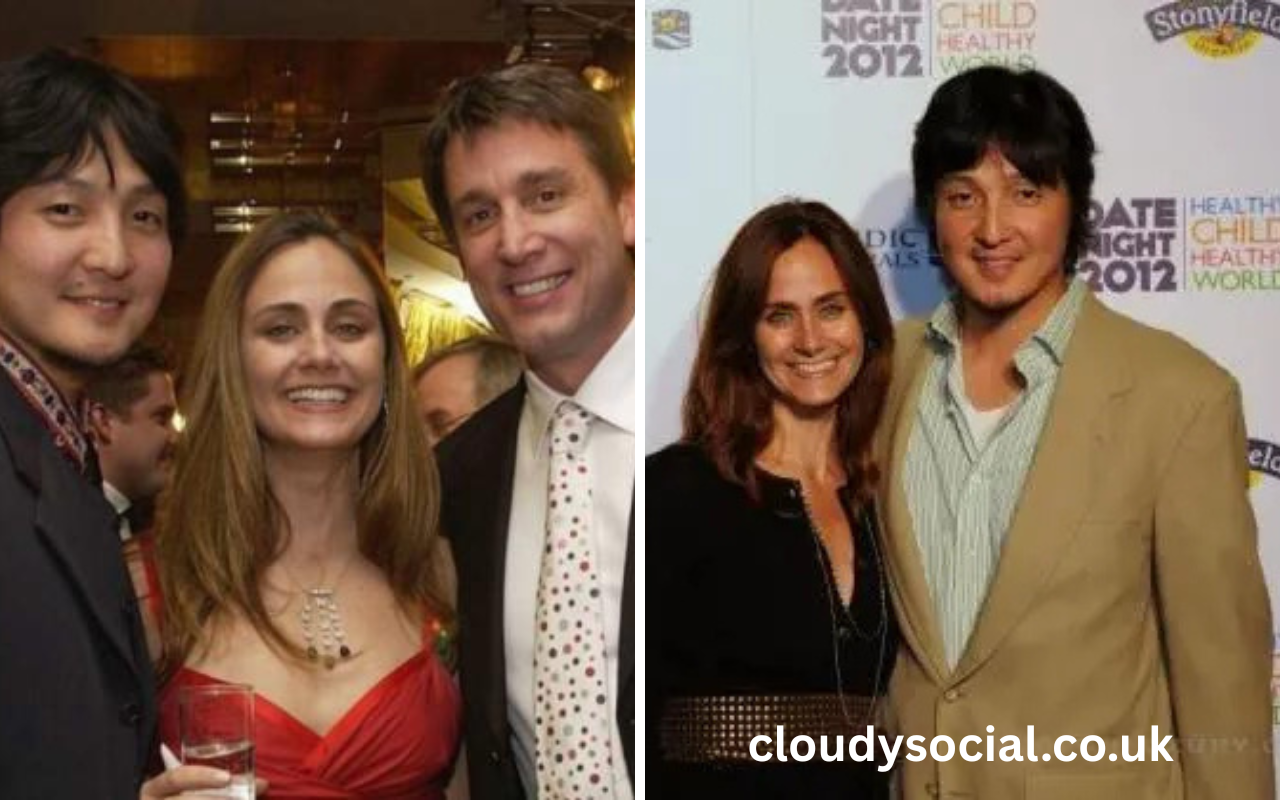
Seung Yong Chung, sometimes professionally known as Seung Chung, is a Korean-American business executive and marketing entrepreneur. He is best known as the co-founder of Cashmere Agency, a Los Angeles-based creative and cultural marketing company, and as the former husband of American actress and author Diane Farr.
Although Chung has maintained a relatively private personal life, his professional career has placed him at the intersection of advertising, entertainment, popular culture, technology, and multicultural marketing. His work with Cashmere Agency helped build a company recognized for understanding how brands communicate with diverse audiences and cultural communities.
Public interest in Chung often comes from two connected areas. Some people encounter his name through his marriage to Diane Farr, who has appeared in television series such as Numb3rs, Rescue Me, and Fire Country. Others know him through his work in the advertising industry, particularly Cashmere Agency’s campaigns for major entertainment, technology, automotive, fashion, and consumer brands.
Who Is Seung Yong Chung?
Seung Yong Chung is a marketing executive, entrepreneur, and agency co-founder based in the United States. He has spent much of his professional career working in business strategy, finance, communications, and culturally focused advertising.
He became widely associated with Cashmere Agency, which he established with business partner Ted Chung in 2003. The company developed a reputation for producing campaigns shaped by music, entertainment, digital culture, social media, and the experiences of multicultural consumers.
Chung has generally avoided the level of public exposure associated with actors, musicians, and other entertainment personalities. As a result, verified information about him is more readily available through professional announcements, university publications, corporate profiles, and reports about Cashmere Agency than through personal interviews.
His public identity is therefore closely tied to his business leadership. Instead of building a personal celebrity brand, he appears to have concentrated on developing an agency capable of connecting major companies with audiences whose cultural influence was frequently underestimated by traditional advertising firms.
Seung Yong Chung’s Korean-American Background
Secondary biographical profiles commonly report that Seung Yong Chung was born in Seoul, South Korea, around 1970. These accounts state that he moved to the United States with his family when he was approximately two years old.
His exact date of birth has not been reliably established through a primary public record. Consequently, claims giving a precise birthday should be treated cautiously unless supported by an official biography or a direct statement from Chung.
Reports based on coverage of his marriage have also described his family background. His mother was reportedly employed as a nurse at George Washington University Hospital, while his father was associated with an import-export business in Seoul.
These family details provide some context for Chung’s connections to both South Korea and the United States. They also help explain why he is frequently described as Korean-American rather than only Korean or American.
His later career would become strongly connected to multicultural identity and cultural communication. While it would be speculative to attribute his entire professional approach to his childhood, his international family background may have given him firsthand awareness of how identity, culture, and community affect the way people understand brands and media.
Education at Virginia Tech
Seung Yong Chung studied finance at Virginia Tech, where he completed a bachelor’s degree. His financial education became an important foundation for his later work as a business executive.
Finance is especially relevant in the agency world because marketing companies must manage far more than creative projects. Agency leaders are responsible for budgeting, revenue planning, staffing, client relationships, corporate growth, acquisitions, and long-term financial stability.
Chung’s education distinguished him from agency founders whose backgrounds were limited to design, copywriting, or media production. His training gave him the ability to approach marketing as both a creative discipline and a structured business operation.
That combination would later become significant at Cashmere Agency. The company’s work depended on cultural insight and creative originality, but its growth also required financial management, organizational planning, and the ability to work with internationally recognized clients.
Graduate Studies at George Washington University
After completing his undergraduate education, Chung attended George Washington University. He earned a Master of Science degree in 1995.
George Washington University later highlighted Chung through an alumni profile discussing his professional achievements and leadership. The university’s coverage identified him as a prominent graduate who had built a successful career in marketing and agency management.
His graduate education added another level of business preparation before he entered senior corporate and entrepreneurial roles. By combining finance studies with advanced postgraduate training, Chung developed qualifications relevant to both strategic management and company operations.
His connection to George Washington University is also personally notable because reports have associated his mother with George Washington University Hospital. However, the publicly available material does not establish whether that family connection directly influenced his decision to attend the university.
Early Professional Career
Before establishing Cashmere Agency, Seung Yong Chung worked in corporate and professional-services environments. His reported employment included positions at NextLinx Corporation and Ernst & Young.
Ernst & Young, commonly known as EY, is one of the world’s major professional-services firms. Experience in such an organization would typically expose a professional to areas such as financial analysis, corporate systems, risk management, consulting, auditing processes, and large-scale business operations.
NextLinx Corporation operated in the technology and compliance-services sector. Chung’s experience there likely strengthened his understanding of technology-oriented businesses and the operational needs of growing companies.
These roles helped prepare him for entrepreneurship. Starting an agency requires more than identifying a creative opportunity. Founders must establish contracts, build systems, hire employees, manage cash flow, attract clients, and develop a company that can survive changes in technology and consumer behavior.
Chung’s early business experience appears to have provided the practical background necessary to handle these responsibilities.
The Founding of Cashmere Agency
Seung Yong Chung and Ted Chung founded Cashmere Agency in Los Angeles in 2003. The agency was built around the idea that culture should not be treated as a minor addition to advertising strategy.
At the time, many major advertising campaigns approached multicultural communities as separate or secondary markets. Cashmere developed a different model by recognizing that music, entertainment, streetwear, digital communities, and diverse consumer groups were increasingly shaping mainstream culture.
The company positioned itself as a creative and cultural agency capable of helping brands participate authentically in those conversations. Its work reportedly included advertising, public relations, social media management, influencer marketing, brand strategy, creative development, entertainment marketing, and audience research.
The agency’s Los Angeles location also supported its growth. Los Angeles is a major center for film, television, music, technology, fashion, gaming, and celebrity culture. Operating in that environment gave Cashmere access to industries and communities that were becoming increasingly important to global marketing.
Why Cashmere Agency Was Different
Cashmere Agency became known for treating culture as a central business consideration rather than a decorative element. Its approach involved understanding how communities communicate, what entertainment they consume, which public figures they trust, and how cultural trends move from smaller groups into the mainstream.
Traditional marketing organizations sometimes relied heavily on broad demographic categories. Cashmere’s model placed greater emphasis on cultural behavior, identity, influence, and community participation.
This approach became especially valuable as social media transformed advertising. Consumers were no longer simply receiving messages through television commercials or print advertisements. They were responding publicly, remixing brand content, following influencers, creating memes, and participating in online communities.
Brands therefore needed agencies that could understand conversations rather than merely distribute advertisements. Cashmere’s focus on cultural intelligence positioned it well for this shift.
The company’s work also reflected the growing economic importance of multicultural audiences. Black, Latino, Asian-American, immigrant, and younger consumers increasingly influenced music, fashion, food, entertainment, language, and internet culture. Marketing campaigns that ignored those audiences risked appearing outdated or disconnected.
Major Clients and Brand Work
Cashmere Agency has been associated with campaigns and projects involving major international companies. Reported clients have included Google, BMW, Netflix, Disney, Apple, Adidas, Taco Bell, and Amazon.
The presence of such clients demonstrates the level of trust the agency developed within the marketing industry. These companies operate in highly competitive sectors and typically require agencies to manage complex campaigns involving large audiences, substantial budgets, and significant reputational risk.
Working with entertainment companies such as Netflix and Disney would require an understanding of fan communities, media consumption, storytelling, and digital engagement. Technology companies such as Google and Apple would demand knowledge of innovation, consumer behavior, and rapidly changing online platforms.
Automotive work for a company such as BMW would involve lifestyle positioning and brand prestige, while campaigns for Adidas would connect with sports, music, streetwear, and youth culture. Consumer brands such as Taco Bell would depend heavily on humor, internet trends, and culturally relevant communication.
Cashmere’s reported client portfolio shows why cultural fluency became an important commercial capability rather than merely a specialized advertising service.
Seung Yong Chung’s Leadership at Cashmere
Seung Yong Chung initially served as a senior executive and president of Cashmere Agency. In March 2021, the company announced that he had moved from the position of president to chief executive officer.
As CEO, Chung was described as being responsible for the agency’s strategic direction and financial health. These responsibilities aligned closely with his educational and professional background.
A chief executive in an agency environment must balance creative ambition with financial discipline. The CEO is responsible for ensuring that the organization can attract talent, retain clients, deliver profitable work, and expand without losing the qualities that made it distinctive.
Chung’s role appears to have focused heavily on these organizational and business priorities. While creative teams developed campaigns, his leadership helped guide the agency’s broader direction.
His position also required him to respond to significant changes in the advertising industry. During Cashmere’s growth, digital marketing expanded rapidly, social platforms became dominant, influencer marketing evolved into a major industry, and brands faced increasing pressure to communicate responsibly about identity and social issues.
Cashmere Agency’s Industry Recognition
Cashmere Agency received substantial recognition within the advertising world. It was named Ad Age’s Multicultural Agency of the Year in 2019.
The agency was also identified as an Agency to Watch in 2020 and received A-List Standout recognition in 2021. Its creative projects earned honors connected with major industry institutions, including Cannes Lions, the Clio Awards, and the Webby Awards.
These achievements belong primarily to Cashmere Agency and the teams responsible for its campaigns. They should not automatically be described as individual awards personally presented to Chung.
Nevertheless, agency-level recognition remains relevant to his biography because he was one of the company’s founders and senior leaders. An executive plays an important role in shaping the hiring decisions, business strategy, client relationships, and internal environment that allow creative work to succeed.
The awards also indicate that Cashmere moved beyond being viewed only as a niche multicultural agency. It became recognized as a competitive creative organization capable of influencing the wider advertising industry.
The S4 Capital and Media.Monks Merger
In 2021, Cashmere Agency became part of a larger international advertising and digital-services network through a merger involving S4 Capital and Media.Monks.
At the time of the transaction, Cashmere reportedly employed more than 150 people. This figure demonstrated how far the company had grown since its founding in 2003.
S4 Capital was created as a digital advertising and marketing-services organization, while Media.Monks operated as a global digital content, data, and media company. Bringing Cashmere into that network expanded the group’s creative and cultural-marketing capabilities in the United States and internationally.
For Cashmere, the merger provided access to broader resources, technology, clients, and global markets. For Media.Monks and S4 Capital, the deal added an agency with established cultural credibility and experience communicating with diverse audiences.
Chung reportedly played a role in overseeing Cashmere’s integration into the larger organization. Integration following a merger can be challenging because leaders must combine business systems and corporate structures while attempting to preserve the identity and expertise of the acquired company.
Questions About His Current Role
Some relatively recent professional profiles have continued to identify Seung Yong Chung as Cashmere’s co-founder and CEO. However, less authoritative entertainment-oriented publications have claimed that he left the agency in December 2024.
That reported departure has not been consistently confirmed through a clearly documented announcement from Cashmere, Media.Monks, or S4 Capital in the material previously reviewed. His exact current operating position should therefore be described with caution.
It is accurate to identify him as the co-founder and former or longtime senior leader of Cashmere Agency. Describing him definitively as the company’s current CEO may require updated confirmation from an official corporate source.
This uncertainty illustrates a broader issue with online celebrity and business biographies. Smaller websites frequently repeat information from one another without verifying changes in employment, marital status, wealth, or other personal circumstances.
Seung Yong Chung and Diane Farr
Outside the advertising industry, Seung Yong Chung is widely known because of his relationship with Diane Farr.
Farr is an American actress, writer, and producer. She gained recognition for television roles in programs including Numb3rs, Rescue Me, Californication, The Good Doctor, and Fire Country.
She has also worked as an author and has written about relationships, parenting, culture, race, and family life. Her public career brought more attention to Chung than he might otherwise have received as a private business executive.
The couple’s relationship became especially notable because Farr publicly discussed the complexities of an interracial marriage. Her writing explored the reactions, expectations, and family conversations that can arise when two people come from different racial and cultural backgrounds.
Their Wedding in 2006
Seung Yong Chung and Diane Farr married in California in late June 2006. Reports about the wedding described the marriage as a union between Chung’s Korean-American background and Farr’s Irish-Italian-American family heritage.
Their wedding received coverage partly because Farr was already an established television actress. It also attracted attention because discussions about interracial marriage formed an important part of the couple’s public story.
Some later accounts of their relationship have focused on the resistance or concerns they reportedly encountered from family members. Farr used these experiences as material for broader discussions about prejudice, tradition, cultural expectations, and the realities of forming a multicultural family.
The relationship was not presented only as a private romance. Through Farr’s writing and interviews, it became an example of the personal negotiations that can occur when individuals from different cultural communities build a life together.
Diane Farr’s Writing About Interracial Marriage
Diane Farr wrote openly about her experiences as a white woman married to a Korean-American man. Her work considered how race can influence family approval, social assumptions, and the treatment of couples in public life.
Her book Kissing Outside the Lines: A True Story of Love and Race and Happily Ever After examined interracial relationships and the obstacles couples may experience.
Although Chung was connected to the personal experiences behind the book, the published work represented Farr’s perspective. It should not automatically be interpreted as a complete account of Chung’s own opinions or experiences.
The book helped expand public interest in their marriage. Readers who discovered Chung through Farr’s acting career often learned more about him through discussions of the couple’s cultural backgrounds.
Their relationship demonstrated that interracial marriage can involve more than two individuals. Family traditions, racial assumptions, immigration histories, and social expectations can all influence how a partnership is received.
Seung Yong Chung’s Children
Seung Yong Chung and Diane Farr have three children together.
Their son was born in 2007. The couple later welcomed twin daughters in 2008.
The births occurred relatively close together, meaning the family was raising three young children within a short period. Farr occasionally discussed motherhood and family life publicly, but Chung remained more private.
Because the children are not public officials or independently prominent entertainment figures, unnecessary personal details about them should be avoided. Their names and other identifying information are often repeated by biography websites, but responsible coverage should focus on publicly relevant facts rather than exposing private family information.
Chung’s role as a father remains an important part of his biography, especially because reports indicate that he and Farr continued to cooperate as parents after the end of their marriage.
Divorce and Later Family Relationship
Public reports indicate that Seung Yong Chung and Diane Farr eventually divorced. However, sources have not been fully consistent about the exact year or legal timeline.
Some accounts state that their marriage had ended by 2020, while other reference pages identify 2017 as the year of divorce. Without direct access to a reliable legal record or a definitive statement from the former couple, the precise date should not be presented as certain.
Later entertainment coverage has suggested that Chung and Farr maintained an amicable family relationship. Farr has reportedly continued to speak respectfully about him in connection with their children and shared family history.
An amicable post-divorce relationship can be especially important when former spouses are raising children together. However, the exact nature of their private parenting arrangement has not been extensively documented and should not be assumed.
Is Seung Yong Chung Married Now?
There is no widely verified public information establishing that Seung Yong Chung has remarried.
Some biography sites may speculate about his current relationship status, but such claims should not be treated as factual without a reliable source or a public statement.
His former wife, Diane Farr, has continued to receive media attention because of her acting career. Chung, by contrast, has kept his romantic life largely outside the public eye.
The absence of public information does not prove that he is single. It only means that his current relationship status has not been reliably confirmed in the material available.
Seung Yong Chung’s Net Worth
A number of online biography websites estimate Seung Yong Chung’s net worth at approximately $19.8 million to $20.3 million.
These figures are not supported by publicly disclosed financial statements, property records, compensation reports, or transaction documents that would make the estimates dependable. As a result, they should be regarded as speculation rather than verified fact.
Estimating the wealth of a private agency executive is particularly difficult. Chung’s financial position could be influenced by salary, ownership stakes, the terms of Cashmere’s merger, investments, property, taxes, and private business arrangements.
The fact that Cashmere worked with major clients and became part of a global marketing group suggests that Chung had a successful business career. It does not, however, confirm a specific personal fortune.
A responsible biography should therefore state that his exact net worth is unknown.
Height, Religion, and Other Personal Claims
Online profiles frequently publish claims about Seung Yong Chung’s height, weight, religion, physical appearance, and personal habits.
Many of these details appear to originate from entertainment biography sites rather than official profiles or direct interviews. They are often copied between websites without clear evidence.
Chung is commonly described as being of Korean heritage and as having dark hair and dark eyes. More exact physical measurements should not be presented as confirmed unless they come from a credible source.
Similarly, public information does not clearly establish his religious beliefs. It would be inappropriate to assign him a religion based only on ethnicity, family background, marriage traditions, or speculation.
The Importance of Multicultural Marketing
Seung Yong Chung’s career is closely connected to the growth of multicultural marketing in the United States.
For many years, some advertisers treated multicultural campaigns as separate projects with smaller budgets and limited strategic importance. This approach often failed to recognize how deeply diverse communities influence mainstream entertainment and consumer behavior.
Agencies such as Cashmere challenged that model. They argued, through their work, that culture is not a side category. Music, language, race, identity, fashion, humor, and community experiences shape how consumers relate to products.
This shift became increasingly important as younger generations developed more fluid cultural identities. A person might participate simultaneously in a local community, an ethnic culture, an online fandom, a music scene, a gaming community, and a global social platform.
Marketing to such audiences requires more than translating a traditional advertisement. It requires understanding how people see themselves and how they determine whether a company is authentic.
Cashmere Agency’s Relationship With Entertainment
Entertainment has been central to Cashmere Agency’s identity. The agency’s work has drawn on music, film, television, celebrity influence, and digital storytelling.
Entertainment marketing differs from conventional product advertising because audiences often have strong emotional relationships with artists, characters, franchises, and fan communities.
An agency working in this field must understand not only how to reach an audience but also how to avoid alienating it. Fans can quickly reject campaigns that feel forced, opportunistic, or disrespectful to the culture surrounding a project.
Cashmere’s entertainment experience likely contributed to its work with streaming platforms and major media companies. The agency’s ability to connect corporate campaigns with cultural conversations became one of its defining strengths.
Social Media and Influencer Marketing
Cashmere Agency also developed during the rise of social media and influencer marketing.
When the company was founded in 2003, platforms such as Instagram, TikTok, and X did not exist in their current forms. Over the following two decades, these services transformed the relationship between brands and consumers.
Influencers emerged as powerful intermediaries who could introduce products to specialized communities. At the same time, consumers became more capable of publicly criticizing brands and organizing responses to controversial campaigns.
For an agency leader such as Chung, these changes created both opportunities and risks. Companies needed creative partners who could move quickly, interpret online behavior, and understand the cultural meaning of trends.
Cashmere’s background in music and entertainment made it well suited to influencer-driven marketing because cultural credibility had always been central to its approach.
Seung Yong Chung’s Business Philosophy
Chung has not published a widely available personal manifesto explaining his complete business philosophy. Nevertheless, his career suggests an emphasis on strategic growth, cultural relevance, and financial sustainability.
His finance education and executive responsibilities indicate that he approached agency management with a strong operational perspective. At the same time, Cashmere’s success depended on allowing creative and cultural specialists to influence major brand decisions.
This balance is one of the most difficult challenges in advertising. Agencies must produce original work while remaining profitable and accountable to clients.
Chung’s leadership appears to have supported a structure in which cultural expertise could function as a serious commercial capability. Instead of treating diversity only as a moral statement, Cashmere demonstrated that understanding diverse audiences could produce competitive business value.
Connection to Ted Chung
Seung Yong Chung founded Cashmere Agency with Ted Chung. Despite sharing the same surname, public descriptions primarily identify them as business partners, and widely available material does not clearly establish a family relationship.
Ted Chung has been associated with entertainment, music, branding, and creative strategy, while Seung Yong Chung brought experience in finance, business operations, and executive management.
Their professional strengths appear to have complemented one another. Successful agency partnerships often depend on a division between creative leadership and organizational leadership, although both founders may participate across those areas.
Together, they built Cashmere from an independent Los Angeles agency into a recognized company employing more than 150 people before its merger with a larger global network.
Public Image and Privacy
Unlike Diane Farr, Seung Yong Chung has not built a career that depends on regular public visibility.
He has maintained a relatively low profile, with most public information about him coming from company announcements, professional biographies, university publications, business transactions, and articles discussing his former marriage.
This limited visibility has contributed to misinformation. When a person does not frequently give interviews or update public profiles, biography websites often fill the gaps with unverified estimates and repeated assumptions.
Claims about his age, net worth, exact divorce date, current job title, religion, and physical measurements should therefore be evaluated carefully.
His privacy also deserves recognition. Being formerly married to a public figure does not make every aspect of his personal life a matter of legitimate public interest.
Confusion With Other People Named Seung Yong Chung
Seung Yong Chung is not necessarily the only person with that name. Korean names may be written in several Romanized forms, including Seung Yong Chung, Seung-Yong Chung, Seungyong Chung, or Seung Chung.
Search results may therefore include academics, corporate employees, researchers, medical professionals, athletes, or other individuals who are unrelated to Cashmere Agency or Diane Farr.
The marketing executive discussed in this article is specifically the Virginia Tech and George Washington University graduate who co-founded Cashmere Agency and married Diane Farr in 2006.
Readers should verify professional affiliations before assuming that every profile under the same name refers to him.
Seung Yong Chung’s Professional Legacy
Seung Yong Chung’s most significant professional achievement is the development of Cashmere Agency.
The company emerged during a period when advertising was being reshaped by digital media, cultural diversity, and the growing influence of previously underserved audiences. Cashmere’s success demonstrated that cultural knowledge could become a central part of major brand strategy.
Its work with globally recognized clients, its expansion to more than 150 employees, its advertising awards, and its merger into the Media.Monks network all reflect the scale of the organization Chung helped build.
His legacy is therefore not limited to individual campaigns. It also includes his role in establishing a business model that treated cultural fluency as an essential marketing skill.
Why People Search for Seung Yong Chung
Interest in Seung Yong Chung comes from several different audiences.
Advertising professionals may search for him because of Cashmere Agency, its awards, its clients, and its merger with S4 Capital and Media.Monks. Business students may be interested in his transition from finance and corporate employment to agency entrepreneurship.
Entertainment audiences frequently encounter him through Diane Farr. Viewers of Numb3rs, Rescue Me, or Fire Country may become curious about Farr’s former husband, their interracial marriage, and their children.
Readers interested in multicultural families may also discover Chung through Farr’s writing about race, relationships, and family acceptance.
These overlapping areas explain why online information about him often combines serious business history with celebrity-biography content.
Frequently Misreported Information
Several facts about Seung Yong Chung are regularly presented with more certainty than the evidence supports.
His exact date of birth has not been firmly verified. His precise net worth is unknown. The exact year in which his divorce became legally final is inconsistently reported. His current position at Cashmere or Media.Monks also requires updated official confirmation.
There is no dependable basis for many published claims about his height, weight, religion, or current romantic life.
By contrast, his education, early professional experience, role in founding Cashmere Agency, marriage to Diane Farr, and status as a father of three are more consistently documented.
Distinguishing verified information from repeated online speculation is essential when writing about a private individual.
Conclusion
Seung Yong Chung is a Korean-American business executive whose professional influence is most visible through Cashmere Agency. With an educational background in finance and graduate studies, he moved from corporate positions into entrepreneurship and helped establish a marketing company that placed culture at the center of brand strategy.
Cashmere’s work with companies such as Google, Netflix, Disney, BMW, Apple, Adidas, Amazon, and Taco Bell illustrates the agency’s reach. Its industry recognition and eventual merger with Media.Monks and S4 Capital demonstrated that culturally focused marketing had become an important part of the global advertising business.
Chung is also known as the former husband of actress and author Diane Farr. They married in 2006, had three children, and later divorced. Their interracial marriage became part of a wider public discussion through Farr’s writing about love, race, family expectations, and multicultural relationships.
Despite public curiosity, Chung remains a comparatively private person. Many online claims about his wealth, age, current relationships, and personal characteristics are unverified. His documented story is most compelling when centered on what can be established: his education, his business experience, the growth of Cashmere Agency, his contribution to multicultural marketing, and his connection to a prominent American television actress.
You may also read : Jalynn Elordi’s Relationship With Jacob Elordi