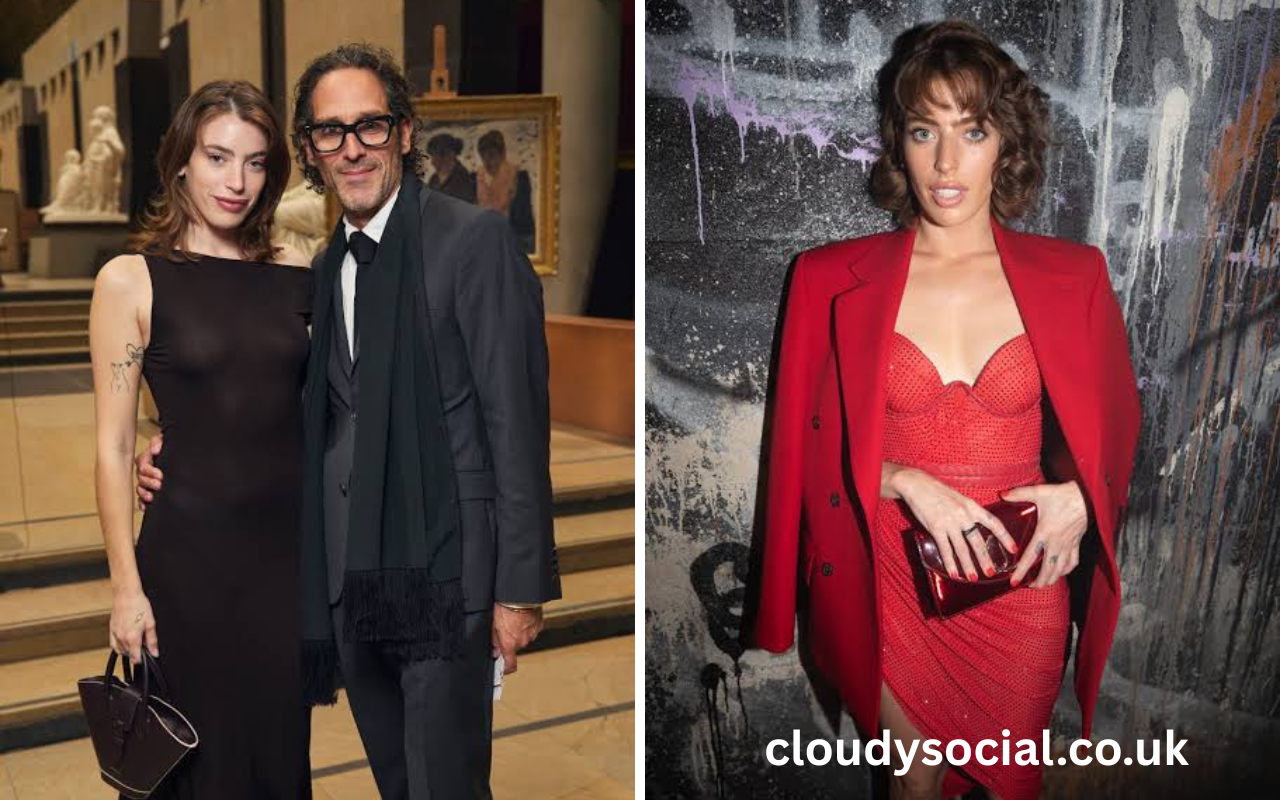
Clara Mathilde McGregor is a British-American actress, model, and producer who has steadily built her own identity in the entertainment industry while being widely recognized as the eldest daughter of acclaimed actor Ewan McGregor and production designer Eve Mavrakis. Although her surname naturally draws attention due to her father’s international fame, Clara Mathilde McGregor has developed a professional path that extends across acting, modeling, independent filmmaking, and production work.
Her career reflects a modern Hollywood trend where emerging artists are no longer confined to a single role. Instead, Clara Mathilde McGregor represents a multi-disciplinary creative professional who moves between screen acting, fashion modeling, and behind-the-camera production. Her most visible projects in recent years, including Bleeding Love, The Birthday Cake, and Reefa, have helped define her as a serious creative contributor rather than simply a celebrity family member.
Understanding Clara Mathilde McGregor requires looking at her upbringing, education, artistic influences, career development, and the evolving public conversation around fame, privilege, and independent creativity in Hollywood.
Early Life and Family Background of Clara Mathilde McGregor
Clara Mathilde McGregor was born on February 4, 1996, in England, into a family deeply rooted in the film and creative industries. Her father, Ewan McGregor, is one of the most recognized actors of his generation, known for iconic performances in films such as Trainspotting, Moulin Rouge!, and the Star Wars prequel trilogy. Her mother, Eve Mavrakis, is a respected production designer who worked behind the scenes in film and television production.
Growing up in this environment meant that Clara Mathilde McGregor was surrounded by filmmaking from multiple angles. Unlike many celebrity children who are exposed only to the acting side of the industry, she experienced both the creative performance aspect through her father and the technical visual storytelling side through her mother. This dual exposure played an important role in shaping her broader understanding of cinema as an art form rather than just a performance career.
Clara is the eldest child in her family and has three younger sisters from her parents’ marriage, along with a younger half-brother from her father’s later relationship. Despite the public interest in her family, Clara Mathilde McGregor has often described her upbringing as relatively private, with her parents making efforts to separate family life from public fame. This separation allowed her to grow up without constant media pressure, even though her father was already an internationally known actor.
Education and Creative Foundation
Education played a significant role in shaping Clara Mathilde McGregor’s artistic direction. She later attended New York University, where she initially focused on photography before transitioning toward film and acting studies. This shift is important because it shows that her entry into acting was not immediate or externally imposed but developed gradually through exploration of visual storytelling.
Her early interest in photography reveals a strong visual sensibility. Photography, as an art form, teaches composition, framing, light control, and emotional storytelling through still imagery. These skills naturally connect with filmmaking and acting, where visual awareness is essential. Clara Mathilde McGregor’s academic journey allowed her to develop a foundation that blended technical understanding with artistic expression.
During her time in New York, she became more involved in acting classes and film studies, gradually moving toward performance-based work. However, she did not abandon her interest in behind-the-scenes creative work. Instead, she integrated both paths, which later influenced her decision to become not only an actress but also a producer.
Entry into Modeling and Fashion Industry
Before establishing herself as a screen actress, Clara Mathilde McGregor entered the modeling world. Her appearance, combined with her artistic background and industry exposure, made her a natural fit for fashion campaigns and editorial work. She signed with major modeling agencies, including IMG Models, and began working in fashion markets such as New York, London, and Milan.
In the modeling industry, Clara Mathilde McGregor was featured in editorial shoots, brand campaigns, and fashion publications. Her modeling work often emphasized a modern, artistic aesthetic that aligned with contemporary luxury fashion trends. Rather than relying solely on commercial modeling appeal, she became associated with editorial storytelling and high-fashion imagery.
Modeling also contributed to her understanding of visual identity and branding. Working with photographers, stylists, and designers gave her firsthand experience in how image-making functions in the fashion world. This experience later became useful in her acting and producing career, where visual presentation and storytelling are closely connected.
Transition from Modeling to Acting
Clara Mathilde McGregor’s transition into acting was gradual and intentional rather than sudden. While she had grown up around film sets, she initially resisted the idea of immediately following her father’s career path. Instead, she explored photography and modeling before deciding to pursue acting more seriously.
Her acting career includes roles in independent films and television projects, where she began building experience and screen presence. Early appearances such as Christopher Robin introduced her to larger studio productions, while films like Reefa and The Birthday Cake allowed her to work in more independent and character-driven environments.
What distinguishes Clara Mathilde McGregor’s acting journey is her willingness to take smaller, diverse roles rather than relying on a single high-profile debut. This approach reflects a long-term career strategy focused on development rather than instant stardom. It also suggests that she values craft and experience over immediate fame.
Clara Mathilde McGregor in The Birthday Cake
One of the key turning points in Clara Mathilde McGregor’s early career was her involvement in The Birthday Cake. This project was particularly notable because it brought her into a professional collaboration that also involved her father, Ewan McGregor. The film is a crime drama that explores family dynamics, loyalty, and moral complexity within a tense narrative structure.
In addition to acting in the film, Clara Mathilde McGregor also took on a production role. This dual involvement marked an important step in her career, showing that she was not only interested in performing but also in shaping how films are developed and produced. Working on both sides of the camera allowed her to understand filmmaking from a more holistic perspective.
This project also attracted public attention because of the real-life father-daughter relationship between Clara and Ewan McGregor. However, both have emphasized that their on-screen characters are fictional and not direct representations of their personal relationship. The emotional complexity of their real bond, however, added a layer of depth to audience perception of the film.
Bleeding Love and Creative Maturity
The film Bleeding Love stands as one of the most defining projects in Clara Mathilde McGregor’s career so far. In this film, she not only plays the lead role but also serves as a producer. The story revolves around a strained father-daughter relationship, where emotional distance, personal struggle, and reconciliation form the central themes.
The project gained significant attention because it features Clara Mathilde McGregor acting opposite her real father, Ewan McGregor. This casting choice created immediate public interest, but the film itself goes beyond curiosity and explores serious emotional themes such as addiction, trauma, and healing.
What makes Bleeding Love particularly important is its production context. Clara was actively involved in shaping the project through her production company work, demonstrating her commitment to storytelling beyond acting alone. The film reflects her interest in emotionally grounded narratives that explore human relationships in depth.
This project also positioned her as a filmmaker in her own right, not just an actress participating in a family collaboration. It showed her ability to contribute creatively at multiple levels, from concept development to performance execution.
Work as a Producer and Deux Entertainment
Clara Mathilde McGregor’s role as a producer is one of the most significant aspects of her evolving career. She co-founded Deux Entertainment alongside creative partner Vera Bulder. This production company focuses on developing original film and television content, particularly projects that emphasize strong storytelling and character-driven narratives.
Through her production work, Clara Mathilde McGregor has moved into a space where she can influence which stories are told and how they are developed. This is an important shift because it reflects a broader change in the entertainment industry, where actors increasingly become producers to gain creative control.
Her involvement in production also highlights her interest in female-led storytelling and independent cinema. Rather than relying exclusively on mainstream studio systems, she appears interested in developing projects that allow for artistic experimentation and deeper narrative exploration.
Acting Projects and Expanding Filmography
Clara Mathilde McGregor’s filmography includes a mix of independent films, studio projects, and television appearances. Her roles in Reefa, The Birthday Cake, and Christopher Robin helped establish her presence in the film industry. She has also appeared in television series such as American Horror Story: NYC, which introduced her to a broader audience within mainstream entertainment.
In addition to completed projects, she has been attached to new productions and developing roles in films such as Noon, a thriller directed by Xavier Palud. These projects suggest that her career is expanding into more diverse genres, including psychological drama and thriller storytelling.
Her career trajectory shows a balance between independent film work and larger industry opportunities. This combination is often important for emerging actors who want both creative freedom and mainstream recognition.
Public Image and Media Attention
Clara Mathilde McGregor is often discussed in relation to the broader conversation about celebrity children in Hollywood. The term “nepo baby” has become widely used in media discussions, and she is frequently included in this category due to her family background.
However, Clara’s approach to this conversation has been relatively open. Rather than denying her privilege, she has acknowledged that her background provided opportunities and access. This perspective has influenced how audiences perceive her compared to other celebrity children who attempt to distance themselves from their family connections.
Her public image is also shaped by her fashion work, social media presence, and editorial appearances. She maintains a balance between professional visibility and personal privacy, which helps her manage attention while continuing to develop her career.
Personal Challenges and Openness
Clara Mathilde McGregor has also been open about personal challenges, including mental health struggles and recovery experiences. She has spoken publicly about anxiety and addiction, and her willingness to discuss these topics has contributed to broader conversations about mental health awareness.
Her openness adds depth to her public identity, showing that her career is not only defined by professional achievements but also by personal growth and resilience. It also connects meaningfully to the emotional themes explored in her film work, particularly in Bleeding Love.
Clara Mathilde McGregor’s Artistic Identity
Clara Mathilde McGregor’s artistic identity is built on multiple creative disciplines. She is not only an actress but also a model, producer, and visual storyteller. This multi-layered identity reflects a modern creative approach where boundaries between fashion, film, and production are increasingly fluid.
Her work suggests a strong interest in emotional storytelling, visual aesthetics, and character-driven narratives. She is part of a generation of artists who are not limited to one role but instead move across different areas of creative production.
Future Career Outlook
The future of Clara Mathilde McGregor’s career appears open and flexible. With ongoing acting roles, production involvement, and fashion work, she is positioned to expand in multiple directions. If she continues developing projects through her production company while taking on challenging acting roles, she may establish herself as both a performer and a filmmaker.
Her ability to navigate fame, family legacy, and independent creativity will likely determine how her career evolves over the next decade. What is clear is that she is not relying solely on her family name but actively building her own professional identity.
Conclusion
Clara Mathilde McGregor represents a modern example of a multi-disciplinary creative professional in Hollywood. While her connection to Ewan McGregor naturally brings attention, her work in acting, modeling, and production demonstrates a deliberate effort to establish an independent identity.
From her early education in photography to her involvement in independent filmmaking and production company development, she has shown consistent interest in storytelling from multiple perspectives. Projects like Bleeding Love highlight her artistic ambition and emotional depth, while her modeling and fashion work contribute to her broader visual identity.
As her career continues to evolve, Clara Mathilde McGregor stands at the intersection of legacy and independence, navigating both privilege and personal creativity in a rapidly changing entertainment industry.