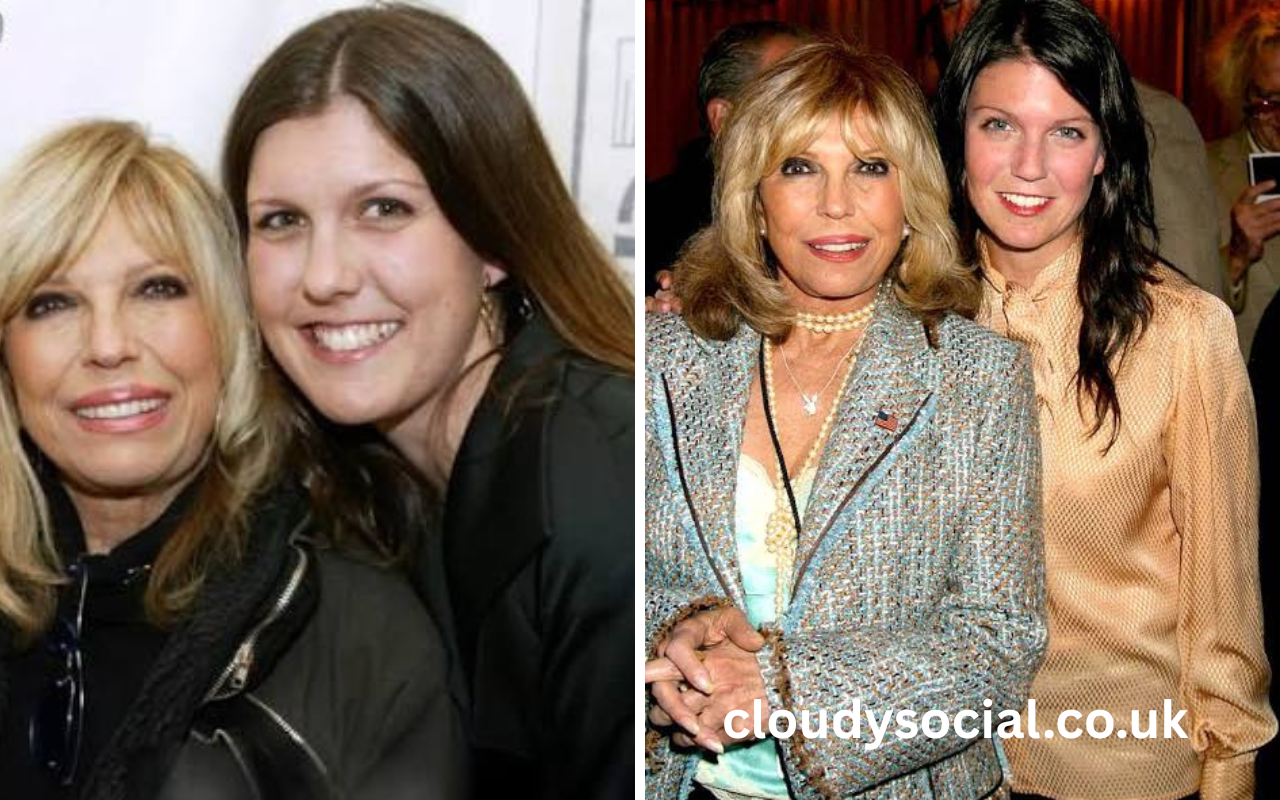
Amanda Kate Lambert is an American visual artist, photographer, curator, author, and photographic archivist best known for her connection to one of the most influential entertainment families in American history. She is the daughter of singer and actress Nancy Sinatra, the granddaughter of legendary performer Frank Sinatra, and the sister of musician Angela Jennifer Lambert, commonly known as A.J. Lambert.
Although Amanda belongs to a world-famous family, she has generally avoided the celebrity lifestyle associated with the Sinatra name. Instead of pursuing a highly public career in acting or popular music, she has devoted much of her professional life to visual art, photography, historical preservation, publishing, and the management of her family’s extensive photographic archives.
She is frequently identified online as Amanda Kate Lambert, although her fuller name has also been published as Amanda Katherine Lambert Erlinger. Professionally, she has appeared under several forms of her name, including Amanda Lambert and Amanda Erlinger. Her work has played an important role in preserving private photographs, artwork, documents, and personal memories associated with Frank Sinatra and the wider Sinatra family.
Early Life and Family Background
Amanda Kate Lambert was born on March 17, 1976, into a family already deeply established in American entertainment history. She grew up in Los Angeles and was surrounded by music, art, film, fashion, photography, and performance from an early age.
Her mother, Nancy Sinatra, became an internationally recognized singer during the 1960s. Nancy achieved particular fame through songs such as “These Boots Are Made for Walkin’,” which became one of the defining pop recordings of its era. She also recorded successful duets, appeared in films and television programs, and developed a distinctive public image that combined fashion, independence, and popular music.
Amanda’s father, Hugh Lambert, was a dancer and choreographer. He married Nancy Sinatra in 1970, several years after the end of Nancy’s first marriage to singer Tommy Sands. Hugh Lambert and Nancy Sinatra had two daughters together: Angela Jennifer Lambert, born in 1974, and Amanda Katherine Lambert, born in 1976.
Amanda’s childhood was affected by the illness and death of her father. Hugh Lambert died of cancer in 1985, when Amanda was still a young child. His death was a major loss for the family and left Nancy Sinatra to raise their two daughters while continuing to manage her own professional and personal responsibilities.
Because inaccurate celebrity biography websites sometimes confuse Nancy Sinatra’s marriages, Amanda has occasionally been incorrectly described as Tommy Sands’ daughter. That claim is false. Tommy Sands was Nancy Sinatra’s first husband, but Amanda’s father was Hugh Lambert.
Amanda Kate Lambert’s Connection to Frank Sinatra
Amanda is one of Frank Sinatra’s granddaughters. Her maternal grandparents were Frank Sinatra and Nancy Barbato Sinatra, also known as Nancy Sinatra Sr.
Frank Sinatra was one of the most important singers and entertainers of the twentieth century. His career included popular music, film, television, live performance, and business. He became famous for his distinctive vocal phrasing, sophisticated public image, and interpretations of American popular standards. His cultural influence continued long after his death in 1998.
To the public, Frank Sinatra was an international celebrity. To Amanda, however, he was also a grandfather. She spent time with him away from the stage and witnessed parts of his personality that were not always visible through his public image.
Amanda has described him as affectionate, generous, encouraging, and strongly interested in the development of his grandchildren. Her memories of him include time spent at his home in Rancho Mirage, California. These experiences helped her understand Frank Sinatra not only as a historical figure but also as a family member with personal interests, habits, creative abilities, and private relationships.
She has said that some of the advice she received from her grandfather concerned education, perseverance, and emotional strength. He encouraged her to complete school, continue her education, avoid giving in to despair, and persist through difficult circumstances.
Frank Sinatra’s Influence on Amanda’s Art
Frank Sinatra is remembered primarily as a singer and actor, but he also had strong interests in painting and photography. These lesser-known aspects of his creative life influenced Amanda’s own artistic development.
Amanda became interested in photography, painting, and visual composition. Her grandfather reportedly introduced her to artistic concepts and encouraged her creative work. Because of this connection, Amanda’s career represents a continuation of a less-publicized part of Frank Sinatra’s artistic identity.
Sinatra’s paintings often used bold colors, geometric forms, and abstract arrangements. He also took photographs throughout his life, including informal family pictures, travel images, portraits, and self-photographs. Amanda later became professionally involved in identifying, organizing, and preserving many of these materials.
Her artistic connection with her grandfather was therefore both personal and professional. As a child and young adult, she experienced his encouragement directly. As an archivist and curator, she later studied and preserved the visual records he left behind.
Education and Artistic Development
Publicly available information about Amanda’s formal education is limited. Secondary profiles often state that she studied art, painting, photography, and art history, but dependable sources do not consistently identify a specific college, university, or degree.
What is clear from her professional work is that she developed substantial knowledge of visual art, photographic preservation, curation, historical research, and archive management. These skills require an understanding of image classification, documentation, reproduction, conservation, exhibition planning, and historical context.
By the early 2000s, Amanda was already being publicly described as an artist. A 2005 report identified her as an artist living in Laguna Beach at that time. That historical reference should not be interpreted as proof of her current residence, particularly because Amanda has maintained a relatively private life.
Her visual-art background eventually became closely connected to the management of the Sinatra family’s photographic collections.
Career as a Photographer and Visual Artist
Amanda Kate Lambert has worked as a photographer and visual artist rather than as a mainstream performer. Her career has included painting, fine-art photography, photographic curation, publishing, exhibition development, and archive preservation.
This path distinguishes her from several other members of the Sinatra family. Her mother built a career as a singer and actress, while her sister A.J. Lambert became a vocalist and musician. Amanda chose a quieter profession centered on images, historical materials, and artistic interpretation.
Her photography has been associated with portraiture, family history, and documentary preservation. Her broader artistic interests include the relationship between personal memory and public history. This theme is especially important in her work with the Sinatra archive, where private family photographs can also carry major historical and cultural value.
A casual family photograph may document clothing, architecture, travel, relationships, artistic environments, or moments involving important public figures. Amanda’s work has involved understanding these images as both intimate records and pieces of twentieth-century cultural history.
Work as Frank Sinatra’s Photographic Archivist
One of Amanda’s most significant professional roles has been her work as a manager and archivist of Frank Sinatra’s personal photographic collection.
She reportedly began managing and organizing the collection in 2002. The materials included photographs held by Frank Sinatra Enterprises as well as photographs preserved by her grandmother, Nancy Sinatra Sr.
Archival work of this kind involves far more than simply placing photographs into storage. Images must be identified, dated, catalogued, scanned, described, compared with other records, and prepared for future reproduction or exhibition. The archivist may need to determine who appears in each picture, where it was taken, who took it, and what historical event or personal occasion it represents.
The collection contained professional portraits, publicity images, performance photographs, candid family pictures, personal snapshots, contact sheets, negatives, and photographs taken by Frank Sinatra himself. Because many images had never been widely published, the archive provided a more private and complex picture of Sinatra’s life.
Amanda’s family knowledge gave her an important advantage. She could interpret relationships and recognize people, places, and personal details that might not be immediately understood by an outside researcher.
Her artistic training also helped her evaluate the photographs visually. She was not only preserving objects but also examining composition, lighting, technique, perspective, and the photographer’s intention.
Discovering Frank Sinatra’s Early Self-Portraits
Among the notable materials Amanda encountered were photographs taken by Frank Sinatra himself. These included mirror self-portraits reportedly dating back to the late 1930s.
In modern language, these photographs have sometimes been described as early “selfies,” although that term did not exist when Sinatra created them. The images are historically interesting because they show a young Frank Sinatra experimenting with identity, presentation, and photography before becoming one of the world’s most recognizable entertainers.
These self-portraits also challenge the idea that Sinatra’s visual image was created entirely by studio photographers, record companies, and Hollywood publicity departments. Even at a young age, he appears to have been interested in controlling or exploring how he looked through a camera.
Amanda’s discovery and presentation of such images helped reveal a different side of her grandfather. The photographs showed that he was not only the subject of millions of professional images but also an active image-maker.
They also supported a broader understanding of Sinatra as a multidimensional artist with interests extending beyond music and cinema.
Role at Frank Sinatra Enterprises
Amanda has been associated with Frank Sinatra Enterprises, the organization involved in managing and preserving Frank Sinatra’s legacy, name, recordings, images, and related intellectual property.
She has been publicly identified as a fine-art and photography curator for the organization. In this role, she helped organize visual materials connected to Sinatra’s life and career.
The position required her to balance family history with professional preservation. The Sinatra archive is not simply a private family collection. It is also connected to exhibitions, books, licensed products, documentary projects, cultural institutions, and historical research.
As a member of the family, Amanda could approach the archive with personal insight. As a professional curator, she also had to consider historical accuracy, image quality, audience expectations, publication standards, and the proper presentation of Sinatra’s life.
This combination of personal access and professional responsibility made her an important figure in the visual preservation of the Sinatra legacy.
The Limited-Edition Book Sinatra
Amanda played a major role in the creation of the authorized limited-edition book “Sinatra,” published in connection with the centenary of Frank Sinatra’s birth.
Frank Sinatra was born on December 12, 1915, and the year 2015 marked the hundredth anniversary of his birth. The centennial led to exhibitions, performances, publications, and cultural programs examining his career and influence.
Amanda worked with writer Robin Morgan to compile and curate the book. The volume presented hundreds of images covering Sinatra’s family background, professional career, personal life, artistic development, and cultural impact.
The approximately 400-page publication included color and black-and-white photographs. Many images came from family collections and had not previously been widely circulated. The book also included professional photographs, private snapshots, historical documents, and pictures taken by Sinatra himself.
Only a limited number of copies were produced, making the publication both a historical project and a collector’s item. Its scale and presentation reflected the significance of Sinatra’s centennial and the enormous visual record created during his lifetime.
Amanda’s role went beyond selecting attractive photographs. She helped shape the narrative created by the images. The order, context, captions, and relationship between photographs allowed readers to move through Sinatra’s life from his early years to his global fame.
Sinatra at 100: A Century in the Making
Amanda also curated an exhibition titled “Sinatra at 100: A Century in the Making,” presented in London during the centennial period.
The exhibition brought together family photographs, professional portraits, historical images, and photographs taken by Frank Sinatra. It offered visitors an opportunity to see visual material that extended beyond familiar publicity photographs.
The exhibition’s title emphasized the relationship between Sinatra’s hundredth birthday and the historical process through which his public identity had been created. His image developed through music, films, fashion, performance, journalism, studio portraiture, family photography, and his own awareness of the camera.
Amanda’s curatorial approach highlighted the difference between Frank Sinatra the icon and Frank Sinatra the person. Famous stage photographs could be placed near quiet family images, allowing audiences to compare the polished entertainer with the father, husband, grandfather, painter, traveler, and amateur photographer.
Through the exhibition, Amanda helped transform a family archive into a public cultural experience.
Sinatra: An American Icon
Amanda participated in events connected with “Sinatra: An American Icon,” a major exhibition and cultural project developed around Frank Sinatra’s centennial.
The project involved institutions including the Grammy Museum and the New York Public Library for the Performing Arts. It examined Sinatra’s influence on music, entertainment, fashion, politics, film, and American culture.
Amanda’s involvement reflected her status as both a family representative and a specialist in the visual archive. Her knowledge of private photographs and family materials allowed her to contribute information that was not available through commercial recordings or film histories alone.
Projects such as “Sinatra: An American Icon” demonstrated how an entertainer’s legacy can be studied through multiple forms of evidence. Music recordings reveal Sinatra’s voice, films preserve his acting, newspaper archives show his public reputation, and family photographs provide access to personal environments and relationships.
Amanda’s work helped ensure that photography remained a central part of that historical interpretation.
Sinatra: My Kind of Town
In 2018, Amanda was connected with the exhibition “Sinatra: My Kind of Town” in Chicago.
The title referred to Sinatra’s famous association with the song “My Kind of Town,” which celebrated Chicago and became one of the recordings closely linked with his public image.
The exhibition included authenticated photographs from the Sinatra Collection and explored his relationship with Chicago. It also demonstrated how the family archive could be organized around a specific city, theme, period, or aspect of Sinatra’s career.
Amanda’s archive work made such exhibitions possible. Before photographs can be displayed publicly, they need to be preserved, identified, reproduced at a suitable quality, authenticated, and placed in an accurate historical context.
The Chicago exhibition showed that Amanda’s work was not limited to maintaining a private collection. It supported public programs that introduced Sinatra’s history to audiences in different cities and cultural settings.
Nancy Sinatra: One for Your Dreams
Amanda later collaborated on “Nancy Sinatra: One for Your Dreams,” a photographic retrospective focused on the life and career of her mother.
The book was created with author and photographic editor David Wills. It explored Nancy Sinatra’s music, film appearances, fashion, family life, cultural influence, and activism.
Luxury editions appeared around 2022, followed by a broader trade edition in 2023. The project offered readers a detailed visual account of Nancy Sinatra’s career while also examining her as a person beyond her most famous recordings.
An important feature of the book was an extended interview conducted by Amanda with her mother. This created a personal, intergenerational dimension. Rather than relying only on an outside interviewer, the project allowed Nancy to discuss her experiences with her daughter.
Amanda’s involvement made the book both a professional retrospective and a family conversation. Her understanding of photography, archives, and family history helped shape the selection and interpretation of the images.
The publication also expanded Amanda’s archival role beyond Frank Sinatra. It positioned her as a curator of the wider Sinatra family story, including her mother’s independent achievements.
Relationship With Her Mother Nancy Sinatra
Amanda appears to share a close relationship with Nancy Sinatra. Nancy has publicly celebrated Amanda’s birthdays and referred to her with affection.
Their professional collaboration on “Nancy Sinatra: One for Your Dreams” indicates a high level of trust. A photographic retrospective often includes personal images, private memories, career challenges, family relationships, and sensitive historical material. Amanda’s role required her to approach these subjects as both a daughter and an editor.
Nancy Sinatra’s career has sometimes been discussed mainly in relation to her famous father. However, she established a recognizable identity of her own through music, fashion, film, television, and political and social engagement.
Amanda’s work on her mother’s retrospective helped present Nancy as an individual artist rather than simply as Frank Sinatra’s daughter. At the same time, the book explored the family relationships that shaped her life.
Amanda’s Sister A.J. Lambert
Amanda’s older sister is Angela Jennifer Lambert, better known as A.J. Lambert. Born in 1974, A.J. pursued a career in music and has performed material associated with the Great American Songbook as well as songs from alternative and independent music traditions.
The two sisters represent different creative paths within the Sinatra family. A.J. works primarily through sound and performance, while Amanda’s career has centered on visual art, photography, preservation, and publishing.
Both sisters inherited connections to a major musical legacy, but neither simply copied the career of their grandfather. Their work reflects individual interests and creative identities.
Amanda and A.J. have appeared together at family events, cultural programs, exhibitions, and public occasions connected with Nancy Sinatra and Frank Sinatra.
Marriage to Michael Erlinger
Amanda is married to Michael Erlinger and is therefore also publicly known as Amanda Erlinger.
Her husband has remained largely outside the public attention associated with the Sinatra family. Amanda has generally kept details of her marriage and domestic life private.
This privacy is consistent with her overall public image. Although she participates in exhibitions, interviews, book projects, and family events, she does not appear to seek constant coverage of her personal life.
Reliable public information about the couple’s marriage is limited. Many online biography sites attempt to fill such gaps with speculation, but unsupported claims should not be treated as fact.
Amanda Kate Lambert’s Daughter
Amanda and Michael Erlinger have a daughter named Annabelle.
Nancy Sinatra has publicly referred to Amanda as Annabelle’s mother. Beyond this basic information, the family has not widely publicized details about the child.
Because Annabelle is not known as a public figure, information about her education, age, daily life, or location should be treated as private unless the family chooses to share it.
Amanda’s decision to limit publicity surrounding her daughter reflects a broader effort to separate family life from the public demands created by the Sinatra name.
A Private Life Within a Famous Family
Amanda Kate Lambert’s public profile is unusual because she is closely connected to a major celebrity dynasty while remaining relatively private.
She occasionally appears at gallery events, book launches, charitable gatherings, family celebrations, and programs connected with the Sinatra legacy. However, she does not maintain the level of media exposure associated with performers, influencers, or entertainment personalities.
Her privacy has sometimes led online publishers to repeat uncertain claims about her education, finances, residence, and lifestyle. The absence of verified information does not justify filling those gaps with assumptions.
Amanda’s public significance should instead be understood through her documented work. She has contributed to books, exhibitions, archives, photographic research, and the preservation of family history.
Amanda Kate Lambert’s Net Worth
No dependable public source has established Amanda Kate Lambert’s exact net worth.
Several celebrity-focused websites publish estimated figures, but these numbers are usually not supported by financial records, company filings, verified property information, or statements from Amanda.
It has also been reported that Frank Sinatra made financial provisions for family members through his estate. However, historical inheritance reports should not be treated as evidence of Amanda’s present financial position.
Personal wealth can change because of taxes, investments, property, business arrangements, family trusts, expenses, and private financial decisions. Without reliable documentation, any specific net-worth figure would be speculative.
Amanda’s professional career may include income from artistic work, publishing, curation, archive management, licensing projects, and family-related business activities, but her actual earnings have not been publicly confirmed.
Misleading Claims and Online Confusion
Amanda Kate Lambert is the subject of several recurring inaccuracies online.
Some websites wrongly identify Tommy Sands as her father. Others confuse her with people who have similar names or mix her biography with that of unrelated artists and social-media personalities.
Her name also appears in several forms, which can contribute to confusion. Amanda Kate Lambert, Amanda Katherine Lambert, Amanda Lambert, and Amanda Erlinger may all refer to the same person in different contexts.
Claims about her height, weight, exact education, current address, personal email, investments, and net worth are often repeated without reliable evidence.
There is also limited verified information about her personal social-media presence. Accounts using similar names should not automatically be assumed to belong to her. A public tag or family mention may provide some evidence of identity, but account names and privacy settings can change.
The most reliable approach is to focus on information connected with recognized exhibitions, published books, reputable cultural organizations, and direct statements from members of the Sinatra family.
Her Contribution to Photographic Preservation
Amanda’s work demonstrates the cultural importance of photographic preservation.
Historical photographs are vulnerable to fading, physical damage, poor storage, chemical deterioration, water, fire, and loss of identifying information. A photograph without a date, location, or list of subjects may become difficult to interpret over time.
Digitization can help protect the content of a photograph, but scanning alone is not enough. The digital file must be organized, described, backed up, and connected with accurate historical information.
Amanda’s role in the Sinatra archive involved connecting images with stories. Her knowledge of the family allowed her to identify personal relationships and private settings, while her professional experience helped prepare the images for books and exhibitions.
Through this work, she preserved material that might otherwise have remained unseen, misunderstood, or vulnerable to deterioration.
Protecting Frank Sinatra’s Human Story
Frank Sinatra’s public identity was built through carefully produced recordings, dramatic performances, stylish photographs, and extensive media coverage. This image made him an icon, but it could also make him seem distant from ordinary life.
Amanda’s archival work helped recover the human story behind that image.
Family photographs can show famous individuals relaxing, traveling, celebrating holidays, painting, talking with relatives, or spending time away from professional obligations. Such images do not erase the public figure, but they add depth and context.
By curating both professional and personal photographs, Amanda helped audiences see the relationship between Sinatra’s public confidence and his private experiences.
This approach does not present a single, simplified version of him. Instead, it allows the archive to reveal multiple identities: entertainer, artist, family member, businessman, cultural symbol, photographer, and private individual.
Preserving Nancy Sinatra’s Independent Legacy
Amanda’s work with Nancy Sinatra’s photographic history is equally important.
Nancy’s career is often reduced to a small number of famous songs, particularly “These Boots Are Made for Walkin’.” However, her professional life included albums, international performances, film roles, television appearances, collaborations, fashion influence, political engagement, charitable activity, and decades of work preserving her father’s legacy.
A detailed photographic retrospective can restore this complexity. It can show how Nancy’s image changed over time, how she worked with photographers and designers, and how she navigated the pressures of being a famous performer from an even more famous family.
Amanda’s involvement allowed the project to combine historical research with personal understanding. As Nancy’s daughter, she could ask questions shaped by family knowledge. As a curator, she could organize those answers for a wider audience.
Public Appearances and Cultural Events
Amanda has appeared publicly at events connected with art, publishing, charity, and the Sinatra family.
Photographic records show her attending exhibitions, book-related events, anniversary programs, and family occasions with Nancy Sinatra, A.J. Lambert, and other relatives.
These appearances are usually connected to a specific professional or family purpose rather than general celebrity promotion. She may attend to discuss an archive, support an exhibition, represent the family, celebrate a publication, or participate in a cultural program.
Her public appearances reinforce the idea that she sees herself less as a celebrity and more as an artist, curator, archivist, and family historian.
Why Amanda Kate Lambert Is Important
Amanda Kate Lambert’s importance does not come simply from being Frank Sinatra’s granddaughter.
Her real contribution lies in what she has done with her access to family history. She has helped preserve photographs, discover overlooked images, organize exhibitions, edit major books, and present a more complete picture of both Frank and Nancy Sinatra.
Many descendants of famous people inherit personal objects and historical documents. Preserving those materials responsibly, however, requires years of work, patience, technical knowledge, artistic judgment, and respect for accuracy.
Amanda has helped turn private collections into organized cultural resources. Through exhibitions and publications, she has allowed audiences to see images that might otherwise have remained inside family storage.
Her work also demonstrates that cultural legacies are not maintained automatically. They survive because archivists, curators, editors, historians, relatives, and institutions make deliberate decisions to protect them.
Amanda Kate Lambert Today
Amanda continues to be associated publicly with visual art, photography, archival preservation, and the Sinatra family legacy.
Because she maintains a private lifestyle, detailed information about her current residence, daily activities, finances, and future projects is not consistently available. This lack of information should not be interpreted as evidence of inactivity. Much archival and curatorial work takes place away from public attention.
Her best-documented achievements remain her stewardship of Frank Sinatra’s photographic collection, her contribution to the limited-edition “Sinatra” book, her work on Sinatra centennial exhibitions, and her collaboration on “Nancy Sinatra: One for Your Dreams.”
These projects have established her as an important interpreter of her family’s visual history.
Final Thoughts on Amanda Kate Lambert
Amanda Kate Lambert has created an identity that is connected to the Sinatra legacy without being completely defined by it.
She is the daughter of Nancy Sinatra, the granddaughter of Frank Sinatra, the sister of A.J. Lambert, the wife of Michael Erlinger, and the mother of Annabelle. At the same time, she is an artist, photographer, curator, editor, and archivist with her own body of professional work.
Her career has focused on preserving images and memories rather than pursuing maximum public exposure. Through books, exhibitions, interviews, and archive management, she has helped audiences understand the private and artistic dimensions of one of America’s most famous entertainment families.
The Sinatra name gave Amanda access to an extraordinary cultural archive, but access alone does not explain her contribution. Her importance comes from the care, knowledge, and creative judgment she has applied to that material.
For readers searching for information about Amanda Kate Lambert, the most accurate description is not simply “Frank Sinatra’s granddaughter.” She is a visual historian of her family, a custodian of important photographic collections, and a key figure in the continuing preservation of the Sinatra artistic legacy.
You may also read : Thomas Emil Sicks’s Father, Timothy E. Sicks