The identity of Jack the Ripper, the unidentified serial killer who terrorized London’s Whitechapel district in 1888, remains one of the most infamous unsolved mysteries in criminal history. Despite more than a century of police investigations, historical analysis, and modern forensic theories, no suspect has ever been officially proven to be the killer.
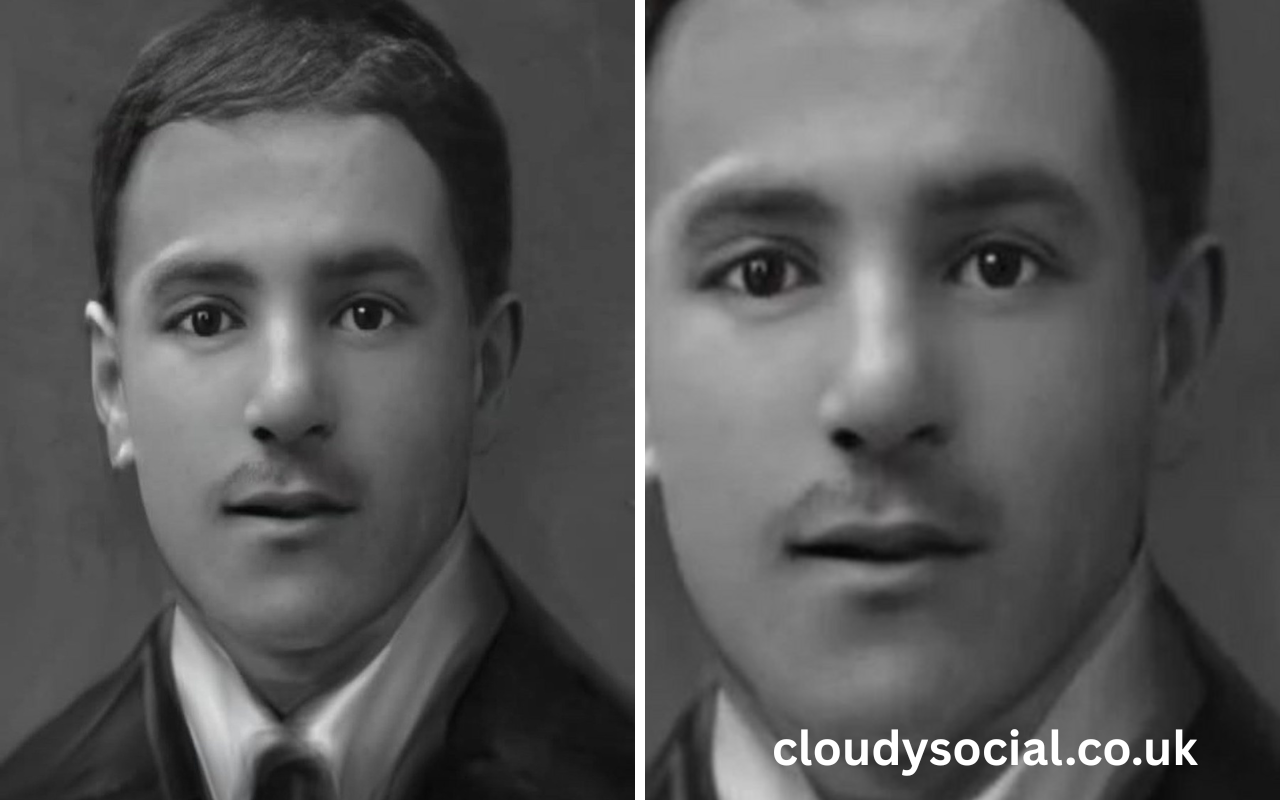
Among all proposed suspects, one of the most widely discussed and controversial figures is Aaron Kosminski, a Polish-Jewish immigrant who lived in London during the time of the murders. His name appears repeatedly in police documents, historical reconstructions, and modern DNA-based theories. Some researchers claim he is the strongest candidate, while critics argue the evidence is unreliable, speculative, or misinterpreted.
The debate over Aaron Kosminski as Jack the Ripper combines Victorian-era police investigation records, psychological profiling, asylum documentation, and 21st-century DNA testing controversies. This article explores all known dimensions of the case in detail.
Who Was Aaron Kosminski? Historical Background and Early Life
Aaron Kosminski was born as Aron Mordke Kozminski in 1865 in Kłodawa, Poland, which was then part of the Russian Empire. He grew up in a Jewish family living under the restrictions of the Pale of Settlement, where economic hardship and social discrimination were common.
During the early 1880s, like many Eastern European Jews seeking better opportunities, Kosminski migrated to England. He settled in the Whitechapel district of London, an overcrowded and impoverished area populated largely by immigrants, factory workers, and sex workers. This location later became central to the Jack the Ripper investigation.
Kosminski reportedly worked as a barber and hairdresser, a profession that placed him in close contact with the local population. His occupation has been frequently cited by theorists as potentially relevant, since barbers in the Victorian era sometimes possessed rudimentary anatomical knowledge, although there is no confirmed evidence that Kosminski had any surgical training.
The Whitechapel Murders and the Emergence of Jack the Ripper
The “Whitechapel Murders” series between 1888 and 1891 included at least eleven deaths, but five victims are universally recognized as the “canonical five” of Jack the Ripper:
Mary Ann Nichols, Annie Chapman, Elizabeth Stride, Catherine Eddowes, and Mary Jane Kelly.
These murders were characterized by extreme brutality, including throat slashing, abdominal mutilation, and in some cases removal of organs. The level of violence led investigators to believe the killer had at least some anatomical familiarity.
Despite intense policing efforts by the Metropolitan Police and the City of London Police, the killer was never identified, and the case became one of the most enduring mysteries in criminology.
Why Aaron Kosminski Became a Police Suspect
Kosminski was not arrested during the investigation, but his name later surfaced in internal police memoranda written after the murders. One of the most cited documents is a report by Sir Melville Macnaghten, Assistant Chief Constable of the Metropolitan Police.
Macnaghten described a suspect referred to simply as “Kosminski,” noting that he was:
- A Polish Jew living in Whitechapel
- Mentally unstable
- Suspected of violent tendencies toward women
- Later confined to an asylum
However, Macnaghten did not provide a first name, which created long-term uncertainty about whether this was Aaron Kosminski or another individual with a similar surname.
Another senior officer, Sir Robert Anderson, also referenced a suspect believed to have been identified but not prosecuted, allegedly due to reluctance of witnesses to testify. These fragmented accounts formed the foundation of the Kosminski theory.
Psychological Condition and Asylum Records
Historical records show that Aaron Kosminski experienced a severe mental health decline in the years following the murders. By the early 1890s, he was admitted to Colney Hatch Asylum, later transferred to Leavesden Asylum, where he remained until his death in 1919.
Asylum records describe symptoms including:
- Hallucinations and paranoia
- Refusal to eat food prepared by others
- Social withdrawal and isolation
- Neglect of personal hygiene
- Episodes of violent behavior
Some researchers argue that these symptoms align with behaviors often associated with paranoid schizophrenia. However, historians caution that mental illness alone cannot be used as evidence of serial murder.
Importantly, Kosminski’s institutionalization occurred after the Whitechapel murders had already begun, making it difficult to establish a timeline-based behavioral link.
The Case for Kosminski as Jack the Ripper
Supporters of the Kosminski theory present several arguments.
One of the strongest is geographical proximity. Kosminski lived in Whitechapel at the time of the murders, placing him physically near the crime scenes. This makes him a realistic suspect compared to many distant or aristocratic theories.
Another argument involves police suspicion records. The fact that senior officers mentioned a suspect named “Kosminski” in internal documents suggests he was seriously considered at some stage of the investigation.
A third argument is based on psychological profiling, where modern interpretations suggest that the killer may have been socially isolated, mentally unstable, and possibly hostile toward women. Kosminski’s later mental illness is sometimes retroactively linked to this profile.
However, none of these factors directly prove guilt, and they remain circumstantial.
The DNA Shawl Theory and Modern Forensic Claims
The most controversial modern development in the Kosminski case is the DNA analysis of a shawl allegedly linked to victim Catherine Eddowes.
In 2007, a businessman and researcher acquired a Victorian shawl said to have been recovered from the Eddowes murder scene. The item was later tested using forensic DNA techniques.
Researchers claimed to have found:
- Mitochondrial DNA matching a descendant of Catherine Eddowes
- Genetic material allegedly linked to descendants of Aaron Kosminski
Based on this, it was argued that Kosminski was present at the murder scene.
Some media reports described this as a “100% match,” and the theory gained widespread attention in documentaries and news coverage.
Scientific Criticism of the DNA Evidence
Despite public interest, the DNA theory has been heavily criticized by forensic experts and historians.
Key criticisms include:
The shawl’s provenance is uncertain, with no verified record confirming it came from the crime scene. The chain of custody is based on family tradition rather than official police documentation.
The DNA used in the study is mitochondrial DNA, which is shared by large populations and cannot uniquely identify an individual.
The shawl may also have been exposed to contamination over more than a century, including handling by multiple people before testing.
Some scientists argue that the results are therefore insufficient to conclusively identify any individual, let alone solve the case.
As a result, many experts conclude that the DNA findings are interesting but not legally or scientifically definitive.
Alternative Explanations and Identity Confusion
Another important issue is the possibility that the “Kosminski” mentioned in police records may not refer to Aaron Kosminski at all. Some historians suggest confusion with another Polish immigrant patient in asylum records, possibly named David Cohen (or Nathan Kaminsky).
This creates uncertainty about whether:
- The police suspect named Kosminski was misidentified
- Multiple individuals were confused in historical records
- Later interpretations incorrectly merged separate identities
This theory weakens the direct link between Aaron Kosminski and the Whitechapel murders.
Competing Suspects in the Jack the Ripper Case
Kosminski is only one of many suspects proposed over time. Others include:
- Montague John Druitt, a barrister and teacher
- Michael Ostrog, a known criminal with a complex record
- Francis Tumblety, an American quack doctor
- James Maybrick, a Liverpool businessman linked to controversial diary claims
Compared to these suspects, Kosminski stands out primarily because of police documentation and modern DNA claims, not because of direct evidence.
Why the Kosminski Theory Remains Popular
The persistence of the Kosminski theory can be explained by three major factors.
First, he is one of the few suspects actually named in official police documents, giving him historical credibility.
Second, his background as a Whitechapel resident with documented mental illness fits modern expectations of criminal profiling.
Third, the DNA shawl narrative provides a modern scientific angle that appeals to public interest, even if the evidence is disputed.
Together, these elements make Kosminski one of the most compelling yet controversial figures in Ripperology.
Conclusion: Is Aaron Kosminski Jack the Ripper?
After more than 130 years of investigation, the identity of Jack the Ripper remains officially unsolved. Aaron Kosminski is one of the strongest historical suspects, supported by police references, geographical proximity, and modern forensic claims.
However, the evidence remains circumstantial and heavily disputed. The DNA theory lacks universally accepted scientific validation, and historical records are incomplete and ambiguous.
Ultimately, Aaron Kosminski cannot be confirmed as Jack the Ripper, but he remains one of the most plausible suspects in the ongoing mystery. The case continues to stand as a powerful reminder of the limits of both Victorian policing and modern attempts to rewrite history through forensic reinterpretation.
You may also read :Entry into Modeling and Early Career Development