Earth, Wind & Fire is not just a band—it is a long-running musical institution built on changing lineups, deep musical innovation, and a shared creative vision that spans more than five decades. When people search for Earth Wind and Fire members, they are usually trying to understand who built the iconic sound of songs like September, Shining Star, Boogie Wonderland, Fantasy, and Reasons, and who continues to carry that legacy today.
The truth is that Earth, Wind & Fire has never been a fixed group of just a few people. Instead, it has functioned like a musical collective, with a core leadership structure surrounded by a rotating ensemble of some of the most talented musicians in funk, soul, R&B, jazz, and pop music history.
The Origin of Earth Wind and Fire Members and Maurice White’s Vision
The story of Earth, Wind & Fire begins with Maurice White, the band’s founder, creative director, and original driving force. Before forming the band, Maurice was a session drummer in Chicago, working with major artists and absorbing influences from jazz, gospel, blues, and African rhythms.
Maurice White’s idea was simple but ambitious: he wanted to create a band that could combine spiritual energy, complex musicianship, and commercial appeal. This vision became the foundation for Earth, Wind & Fire. He also introduced the concept behind the name itself, inspired by astrological and elemental symbolism representing earth, air, fire, and cosmic balance.
In the earliest phase, the group went through experimental formations before becoming Earth, Wind & Fire. Early collaborators included musicians such as Wade Flemons and Don Whitehead. However, the real transformation began when Maurice relocated to Los Angeles and rebuilt the band into a larger, more dynamic musical unit.
The First Major Earth Wind and Fire Members Lineup (Early 1970s)
The early official formation of Earth, Wind & Fire marked the beginning of its signature sound. This period included Maurice White along with his brother Verdine White, who would become one of the most important bass players in funk history.
Other early members included a mix of vocalists, horn players, and instrumentalists who helped shape the group’s first identity. This version of the band leaned heavily into jazz-fusion and experimental soul, laying the groundwork for what would later become a global phenomenon.
However, the band’s real breakthrough came when Maurice decided to restructure everything in the early 1970s, forming what is now considered the classic Earth, Wind & Fire lineup.
The Classic Earth Wind and Fire Members Era (1972–Late 1970s)
The classic lineup of Earth, Wind & Fire is the most celebrated in the group’s history. This version of the band created most of the legendary albums that defined funk and soul music in the 1970s.
Key members included:
Maurice White (vocals, drums, kalimba, production leadership)
Philip Bailey (vocals, percussion, falsetto lead voice)
Verdine White (bass, stage energy, rhythm foundation)
Ralph Johnson (drums, percussion, vocals)
Larry Dunn (keyboards, synthesizers, musical arrangements)
Al McKay (guitar, rhythm structure, funk arrangements)
Andrew Woolfolk (saxophone, flute, horn melodies)
Johnny Graham (guitar, percussion)
Jessica Cleaves (vocals)
This lineup is often considered the creative peak of Earth, Wind & Fire because it produced a seamless blend of vocal harmonies, complex rhythm sections, and powerful horn arrangements.
Philip Bailey’s falsetto became one of the defining sounds of the band, while Maurice White’s deeper vocal tone and production skills gave the group its spiritual and conceptual depth. Verdine White’s bass lines added groove and movement, while Larry Dunn’s keyboards created futuristic textures that set the band apart from other funk groups of the era.
Earth Wind and Fire Members and the Horn Section Legacy
One of the most important elements in Earth, Wind & Fire’s identity is its horn section. Unlike many bands that used horns as background decoration, Earth, Wind & Fire treated horns as a central voice in the music.
The most famous horn players included the legendary Phenix Horns, which featured:
Don Myrick (saxophone)
Louis Satterfield (trombone)
Rahmlee Michael Davis (trumpet)
Michael Harris (trumpet)
These musicians helped define the explosive, joyful, and rhythmic sound that became instantly recognizable in hits like September and Let’s Groove.
The horn arrangements gave Earth, Wind & Fire a “celebration sound”—bright, energetic, and uplifting. This became one of the key reasons the band stood out in both live performances and studio recordings.
Evolution of Earth Wind and Fire Members in the 1980s and Beyond
As the band moved into the 1980s, several original members began to leave or shift roles, but the core identity remained intact. Maurice White continued guiding the artistic direction, while Philip Bailey and Verdine White became the most consistent long-term members.
During this period, Earth, Wind & Fire adapted to changing musical trends, incorporating more electronic instruments, funk-pop elements, and modern production techniques. Albums like Faces and Raise! showed the group’s ability to evolve while maintaining its signature sound.
Even as lineup changes occurred, the band maintained its identity through strong musicianship and recognizable vocal and horn arrangements.
The Role of Philip Bailey in Earth Wind and Fire Members History
Philip Bailey is one of the most important Earth Wind and Fire members of all time. His extraordinary vocal range, especially his falsetto, became a signature sound of the band.
Bailey was responsible for many of the group’s emotional and spiritual vocal performances. His voice created contrast with Maurice White’s deeper tone, allowing Earth, Wind & Fire to produce harmonically rich and emotionally dynamic songs.
Beyond vocals, Bailey also contributed percussion and musical direction, helping to maintain the band’s signature layered sound in live performances.
Even today, Philip Bailey remains one of the central figures representing the band’s legacy.
Verdine White and the Foundation of Earth Wind and Fire’s Groove
Verdine White is widely recognized as one of the greatest funk bassists in music history. His role in Earth, Wind & Fire goes far beyond playing bass—he helped define the physical energy of the band.
His bass lines provided the rhythmic backbone for many of the group’s biggest hits. Songs like September, Boogie Wonderland, and Shining Star rely heavily on his tight, melodic, and energetic playing style.
Verdine also became known for his stage presence, often performing with dynamic movement and expressive energy that matched the band’s celebratory music style.
Ralph Johnson and the Rhythm Core of Earth Wind and Fire Members
Ralph Johnson joined during the classic era and remains an essential part of Earth, Wind & Fire’s continuity. His work on drums, percussion, and vocals helped stabilize the band’s rhythmic structure.
Earth, Wind & Fire’s music is rhythmically complex, often layering multiple percussion instruments with drums, bass, and horn accents. Ralph Johnson played a key role in maintaining this structure both in studio recordings and live performances.
His long-term presence in the group makes him a crucial bridge between the classic lineup and the modern Earth Wind and Fire members.
Modern Earth Wind and Fire Members and Current Lineup
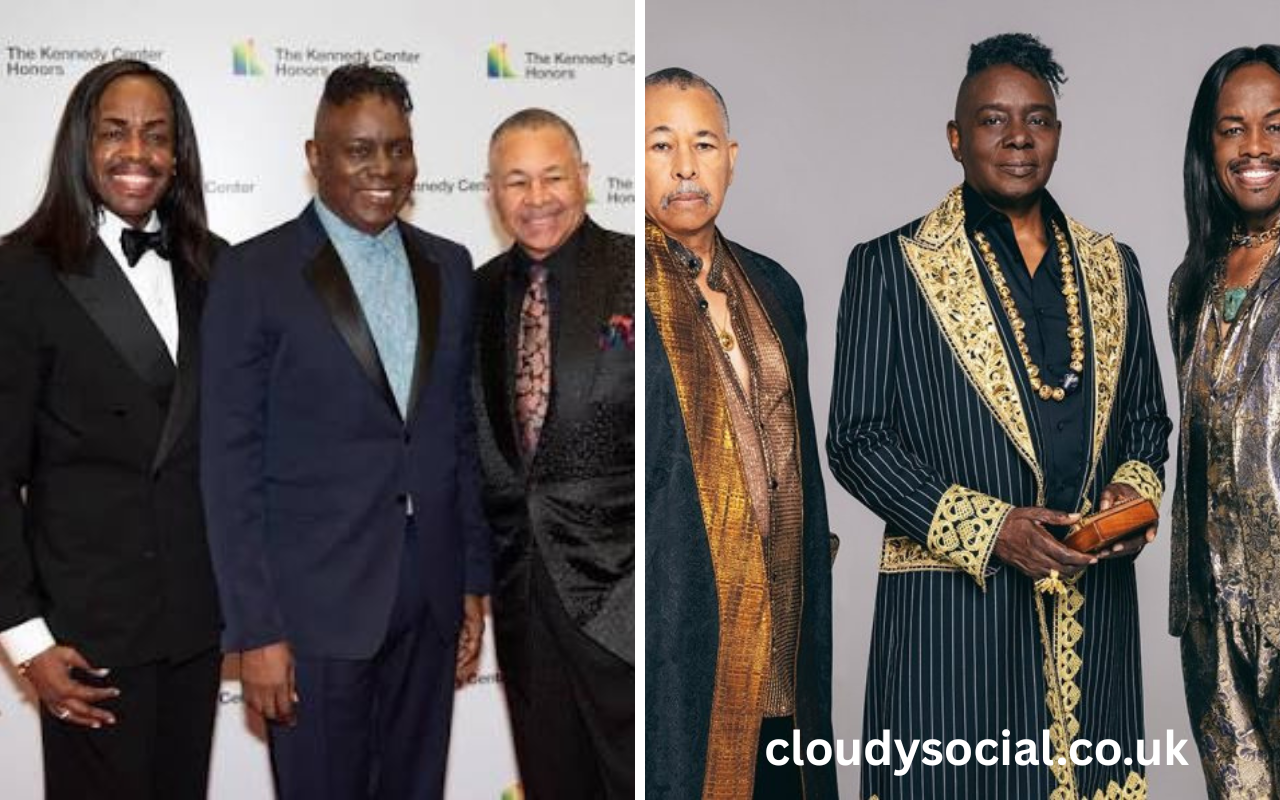
In the modern era, Earth, Wind & Fire continues to perform with a mix of legacy members and newer musicians.
The current structure typically includes:
Philip Bailey
Verdine White
Ralph Johnson
Myron McKinley (keyboards)
John Paris (drums)
Morris O’Connor (guitar)
Serg Dimitrijevic (guitar)
B. David Whitworth (vocals/percussion)
Along with a modern horn section that continues the band’s traditional brass-driven sound.
This modern lineup keeps the Earth Wind and Fire legacy alive in global tours and live performances, ensuring that new generations experience the band’s signature sound in real time.
Earth Wind and Fire Members and Their Musical Style
The defining feature of Earth, Wind & Fire members is not just their individual talent, but their ability to function as a unified musical system. Each member contributes a specific layer:
Vocals create emotional storytelling
Bass provides groove and movement
Drums and percussion build rhythm complexity
Keyboards add harmony and atmosphere
Guitar strengthens funk rhythm structure
Horns deliver power and celebration energy
This layered structure is why Earth, Wind & Fire music feels so full, rich, and energetic.
The Legacy of Earth Wind and Fire Members in Music History
Earth, Wind & Fire has influenced generations of musicians across multiple genres, including R&B, hip-hop, pop, jazz, and funk. Their music has been sampled by countless artists and remains a major influence in modern production styles.
Their success is not only measured in awards or sales but in cultural impact. The band created a musical identity that represents positivity, unity, and celebration.
From the 1970s classic lineup to the modern touring band, Earth Wind and Fire members have consistently maintained a standard of musical excellence that very few groups in history have matched.
Conclusion
Understanding Earth Wind and Fire members means understanding one of the most dynamic and long-lasting musical collectives ever created. From Maurice White’s visionary leadership to Philip Bailey’s iconic falsetto, Verdine White’s bass energy, and Ralph Johnson’s rhythmic foundation, every member has played a vital role in shaping the band’s identity.
Even as the lineup evolved over decades, the essence of Earth, Wind & Fire has remained the same: powerful musicianship, emotional expression, and a celebration of life through music.
The legacy of Earth Wind and Fire members continues today, proving that great music is not just about individuals—it is about collaboration, vision, and timeless sound.