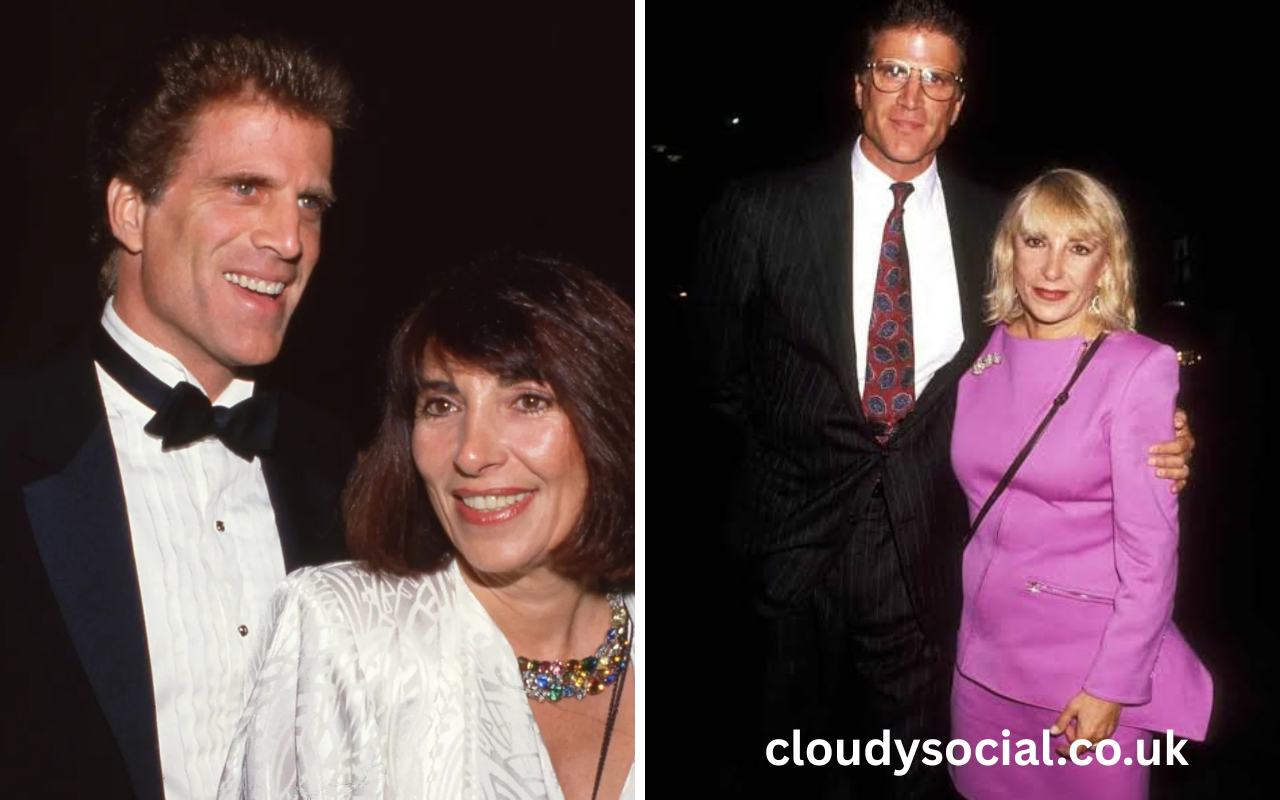
Casey Coates stands as one of those rare public figures whose identity cannot be confined to a single label. While many people first encounter her through searches like “Casey Coates Ted Danson ex-wife” or “Ted Danson second wife Casey Coates,” her life story extends far beyond Hollywood association. Born Cassandra Coates Danson, she built a multi-layered legacy as an environmental designer, solar-energy advocate, documentary producer, photographer, and nonprofit founder. Her work spans architecture, climate activism, ocean protection, and social justice, making her a significant but often under-recognized figure in American environmental history.
Casey Coates’ biography is often simplified into celebrity narratives, yet her contributions reflect decades of forward-thinking environmental action. She lived through major shifts in climate awareness, from the early days of solar experimentation in the 1970s to today’s global climate crisis discussions. Her story reflects both personal resilience and professional dedication, combining design thinking with environmental responsibility.
Early Life and Educational Foundation
Casey Coates was born as Cassandra Coates and raised on Long Island, New York. Her early upbringing in a suburban coastal environment may have contributed to her later sensitivity toward ecological systems and environmental balance. She attended Great Neck High School before pursuing further education at Lasell Jr. College in Boston. Later, she expanded her worldview through a year of study in London, an experience that helped shape her global perspective.
Her most significant academic milestone came when she enrolled at Parsons School of Design in New York City. There, she specialized in Environmental Design, graduating with a Bachelor of Fine Arts in 1975 with honors. This educational path was particularly important because environmental design was still an emerging discipline at the time. Unlike traditional architecture, environmental design considered energy use, ecological impact, and sustainability as core principles.
Casey Coates’ education positioned her at the intersection of design and environmental awareness long before these fields became mainstream. She developed a foundation that combined creativity, technical understanding, and ecological responsibility, which later defined her entire career.
Early Career and Architectural Development
After graduating, Casey Coates began working with the architectural firm of Ben Thompson in Cambridge, Massachusetts. This early professional experience exposed her to practical architectural design, public space planning, and human-centered development. Her time in this environment helped her understand how architecture could influence daily life, energy consumption, and social interaction.
When she later moved to Los Angeles after marrying actor Ted Danson in 1977, her career trajectory shifted toward environmental advocacy and sustainable design. Los Angeles, with its expanding urban development and environmental challenges, became an important backdrop for her evolving work. It was here that she began focusing more deeply on solar energy, ecological architecture, and sustainable housing systems.
Her architectural philosophy became increasingly centered on the idea that buildings should not only serve human needs but also respect environmental limits. This belief guided her future work in solar home design and renewable energy advocacy.
Marriage to Ted Danson and Public Recognition
Casey Coates became widely known in the public sphere due to her marriage to actor Ted Danson, whom she married in 1977. At the time, Danson was still rising in Hollywood, and their relationship predated his major fame from the television series Cheers. Their marriage brought Casey Coates into the orbit of Hollywood culture, although she maintained her focus on environmental and design work rather than entertainment.
The couple had two daughters, Kate and Katrina Danson, born in 1979 and 1985 respectively. Their family life, however, was deeply affected by a significant medical crisis. Casey Coates suffered a severe stroke during the birth of their first daughter, Kate. This event left her with long-term physical challenges, including paralysis on her left side, and placed emotional strain on the family.
Despite these difficulties, she continued to engage in environmental and design work, demonstrating resilience and determination. The marriage eventually ended in divorce in 1993, after more than fifteen years together. Their separation attracted public attention due to Danson’s rising fame and later relationships, but for Casey Coates, the period marked a transition toward a more independent identity in environmental advocacy.
Environmental Vision and Solar Energy Advocacy
One of the defining aspects of Casey Coates’ career is her early commitment to solar energy and sustainable living. Long before renewable energy became a global policy priority, she was already exploring how solar power could be integrated into residential design. Her work emphasized the idea that homes should function as energy-efficient ecosystems rather than passive structures.
She became known for designing solar-powered homes, incorporating renewable energy systems into architectural planning. These projects were not just theoretical; they were practical demonstrations of how sustainable living could be achieved at the household level. Her work helped promote the idea that environmental responsibility begins at home, within the built environment.
Her environmental philosophy extended beyond architecture. She believed that education and awareness were essential to creating long-term change. This belief eventually led her to establish organizations and media projects focused on climate education and renewable energy advocacy.
Founding of Global Possibilities
In 1996, Casey Coates founded Global Possibilities, a nonprofit organization dedicated to promoting solar and renewable energy solutions. The organization was built on the belief that fossil fuel dependence could be reduced through public awareness, policy change, and technological adoption.
Global Possibilities served as a platform for advocacy, education, and environmental communication. It focused on encouraging the use of solar energy in urban development and promoting sustainable infrastructure. Through this organization, Casey Coates was able to expand her influence beyond architectural design into broader environmental policy discussions.
The organization also reflected her long-term vision of integrating environmental awareness into everyday decision-making. Rather than treating climate change as a distant issue, she emphasized immediate, practical solutions that individuals, communities, and governments could implement.
American Oceans Campaign and Ocean Advocacy
Another major contribution of Casey Coates was her involvement in ocean conservation. She co-founded the American Oceans Campaign alongside her then-husband Ted Danson. The organization was established in 1987 and aimed to raise awareness about ocean pollution, marine ecosystem degradation, and coastal protection.
The American Oceans Campaign later merged with Oceana, one of the largest ocean conservation organizations in the world. This transition helped expand the reach of the original mission, ensuring that ocean protection remained a global environmental priority.
Casey Coates’ role in this initiative highlights her understanding that environmental issues are interconnected. She recognized that ocean health, climate change, and urban development are part of the same ecological system. Her advocacy helped bring attention to marine issues at a time when they were often overlooked in public discourse.
Documentary Work and Environmental Communication
Beyond design and activism, Casey Coates also engaged in documentary production. She produced Who’s Got The Power?, an environmental documentary focused on fossil fuel dependence and renewable energy alternatives. The film explored how energy systems shape environmental outcomes and encouraged audiences to reconsider their relationship with energy consumption.
Her work in documentary filmmaking reflects a broader understanding of communication strategy. She recognized that environmental change requires not only technical solutions but also cultural awareness. By using film as a medium, she was able to reach audiences beyond architecture and environmental policy circles.
This approach positioned her as both a designer and storyteller, using visual media to translate complex environmental issues into accessible narratives.
Photography and Social Commentary
In addition to her environmental and architectural work, Casey Coates also explored photography as a form of social commentary. Her project Angels Unawares: Portraits of the Homeless in Los Angeles combined architectural imagery with human stories of homelessness.
The project highlighted the contrast between urban design and social inequality. By placing images of homelessness within architectural contexts, she drew attention to how cities often fail to serve all residents equally. The work emphasized that design decisions have social consequences, particularly for vulnerable populations.
This photographic project received recognition for its originality and conceptual depth, demonstrating her ability to merge artistic expression with social critique.
Professional Influence and Institutional Roles
Casey Coates also contributed to academic and professional institutions. She served on boards related to design, architecture, and environmental media. Her involvement with educational and creative institutions allowed her to influence future generations of designers and environmental thinkers.
She was associated with Parsons School of Design, the Southern California Institute of Architecture, and environmental media organizations. Through these roles, she helped shape discussions around sustainability, design ethics, and environmental communication.
Her institutional contributions reflect her belief that environmental change must be supported by education, collaboration, and interdisciplinary thinking.
Family Life and Personal Challenges
Family played an important role in Casey Coates’ life. Her two daughters, Kate and Katrina Danson, grew up within a household shaped by both Hollywood visibility and environmental activism. Despite personal challenges, including her stroke and later divorce, she remained committed to her children and professional work.
Her health struggles added complexity to her life journey. The stroke she suffered during childbirth was a defining event that impacted both her physical capabilities and emotional experience. However, she continued to engage in creative and environmental work, demonstrating resilience and determination.
Her personal story reflects the intersection of private hardship and public responsibility, a theme that often appears in biographies of individuals who live in both creative and activist spaces.
Later Life and Continuing Legacy
In her later years, Casey Coates continued to focus on environmental awareness, design thinking, and artistic projects. She remained associated with environmental advocacy and creative expression, maintaining her long-standing commitment to sustainability.
She passed away on September 21, 2025, at the age of 88 in Venice, California. Her death marked the end of a life that spanned decades of environmental change, from early solar experimentation to modern climate activism.
Her legacy continues through her contributions to renewable energy advocacy, ocean conservation, environmental design, and social commentary. While public attention often focuses on her connection to Ted Danson, her independent achievements represent a significant body of work in environmental history.
Legacy in Environmental Design and Activism
Casey Coates’ legacy is best understood through her integrated approach to design and activism. She viewed buildings, energy systems, oceans, and communities as interconnected elements of a single environmental system. Her work consistently emphasized sustainability, responsibility, and awareness.
She helped advance the idea that environmental design is not just about aesthetics or efficiency but about ethical responsibility. Her solar home projects, nonprofit leadership, documentary production, and photography all reflect this philosophy.
Her influence continues to be felt in discussions about sustainable architecture, renewable energy policy, and environmental communication strategies.
Conclusion
Casey Coates was a designer, activist, mother, and creative thinker whose life cannot be reduced to a single public label. While often remembered in relation to Ted Danson, her true significance lies in her environmental vision and multidisciplinary contributions.
From Parsons School of Design to solar-powered homes, from ocean advocacy to documentary filmmaking, and from nonprofit leadership to photography, she built a legacy rooted in sustainability and awareness. Her work reflects a lifelong commitment to improving how humans interact with the environment.
Casey Coates’ story is ultimately one of vision and persistence. She demonstrated that design can be a form of activism, that creativity can serve environmental goals, and that personal challenges do not define the limits of contribution. Her legacy remains relevant today as the world continues to confront climate change, energy transition, and environmental responsibility.
you may also read :Little Lamb Productions and Creative Collaboration