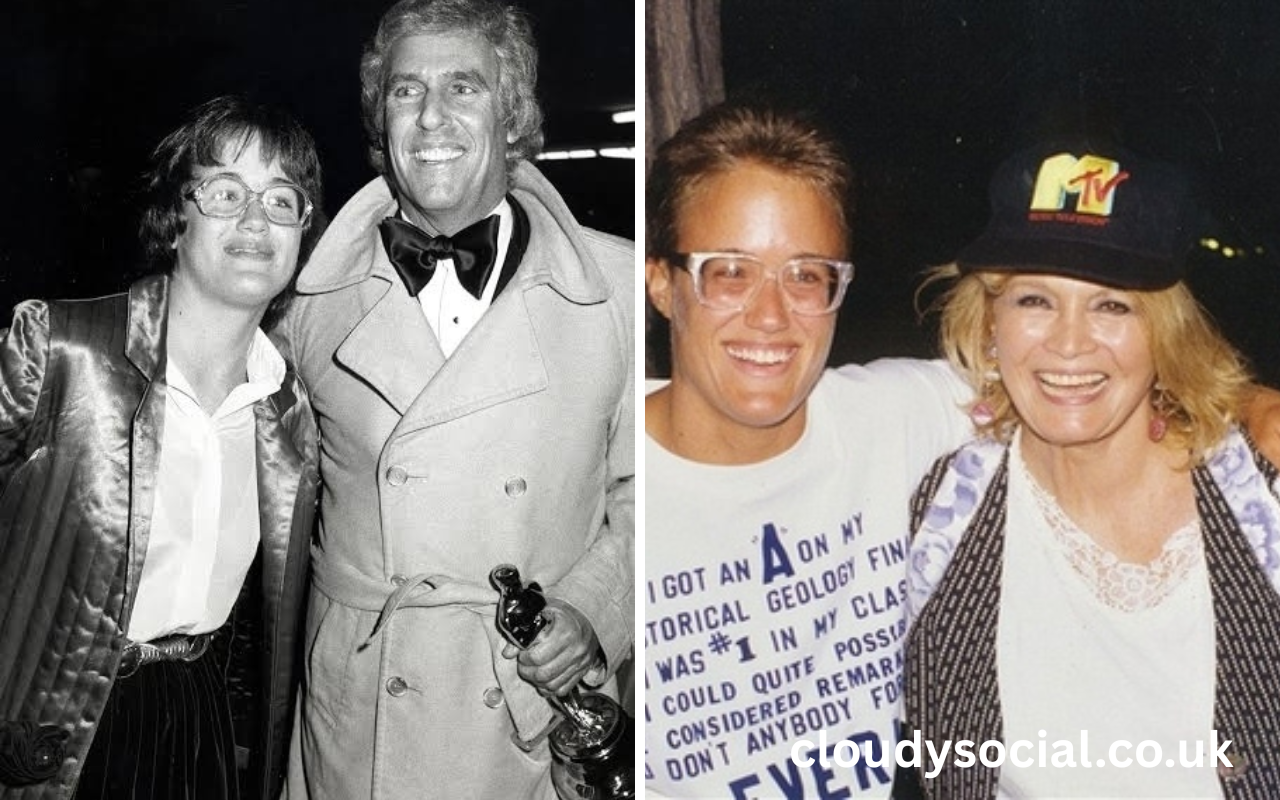
Lea Nikki Bacharach, commonly known as Nikki Bacharach, remains one of the most emotionally discussed figures connected to Hollywood’s golden generation, not because she pursued fame herself, but because she was born into it. As the only daughter of legendary composer Burt Bacharach and iconic actress Angie Dickinson, her life was surrounded by music, film, attention, and expectation from the very beginning. Yet behind the glamour of her family name was a life marked by medical struggles, developmental challenges, emotional pain, and ultimately a tragic ending that continues to be referenced in discussions about autism, mental health, and celebrity family pressures.
Her story is not one of public achievement but of private endurance. It is a narrative that reflects how deeply personal struggles can exist even in families that appear powerful and privileged from the outside. Nikki Bacharach’s life is often remembered as a reminder that fame does not protect against human vulnerability.
Early Life: A Difficult Beginning from Birth
Nikki Bacharach was born on July 12, 1966, in Los Angeles, California. From the very first moments of her life, she faced medical complications that would shape her future in profound ways. She was born prematurely and reportedly required intensive medical care immediately after birth. Her early development took place in an incubator, and concerns about her health began almost instantly.
This fragile beginning was not just a temporary setback. It is widely believed that complications associated with her premature birth contributed to long-term physical and neurological difficulties, including severe vision impairment. These early challenges created a foundation for a life that would require continuous care, support, and adaptation.
Despite these struggles, Nikki was deeply loved by her parents. Burt Bacharach and Angie Dickinson, both at the peak of their Hollywood careers, were suddenly confronted with a very private reality that contrasted sharply with their public lives. The birth of their daughter shifted their priorities, at least for a period of time, toward medical care and emotional support rather than professional commitments.
Family Legacy: Growing Up in a Hollywood Powerhouse
Being born into the Bacharach-Dickinson family meant Nikki was part of one of the most artistically influential households in America. Her father, Burt Bacharach, was already recognized as one of the greatest composers of modern music, responsible for timeless hits that shaped pop culture across decades. His musical compositions were known for their emotional depth and melodic sophistication, earning him global recognition.
Her mother, Angie Dickinson, was equally prominent in the entertainment world. She became a major film and television star, especially known for her roles in crime dramas and strong female characters. She represented elegance, strength, and screen presence during a transformative era in Hollywood.
Despite this extraordinary background, Nikki did not grow up immersed in celebrity life in the traditional sense. Her parents reportedly tried to protect her from excessive media exposure, focusing instead on managing her health conditions. However, the emotional weight of growing up in a high-profile family still influenced her environment. Expectations, public curiosity, and private medical concerns coexisted in a complex and often stressful balance.
Developmental Challenges and Asperger’s Syndrome
As Nikki grew older, it became increasingly clear that she faced developmental and neurological challenges. She was later diagnosed with Asperger’s syndrome, a condition that is now recognized as part of the autism spectrum disorder (ASD).
This condition is characterized by differences in social communication, heightened sensitivity to sensory input, and deeply focused patterns of thought. In Nikki’s case, these challenges were compounded by her early physical complications, particularly her vision impairment, which made daily life more difficult.
Her condition affected her ability to interact socially, maintain consistent emotional balance, and adapt to environments that required high levels of sensory processing. Even simple routines could become overwhelming. While she demonstrated intelligence and curiosity, especially in structured academic environments, the emotional and social demands of life created persistent difficulties.
Her struggles were not always visible to the outside world, but they significantly shaped her personal experiences and long-term mental health.
Education and Intellectual Curiosity
Despite her challenges, Nikki Bacharach displayed a strong interest in learning, particularly in scientific subjects. She eventually pursued studies in geology at California Lutheran University, a field that reflects her fascination with the natural world.
Her academic interests included Earth systems, geological formations, environmental processes, and astronomical phenomena. She was particularly drawn to subjects that involved structure, patterns, and natural order. These areas of study often provide comfort and focus for individuals on the autism spectrum, offering logical frameworks that feel more predictable than social environments.
However, her vision impairment and emotional struggles made it difficult for her to fully pursue a professional career in geology. The gap between her intellectual potential and her physical limitations created a deep emotional conflict that would follow her into adulthood. She was capable in many ways but restricted by circumstances beyond her control.
Life with Care and Emotional Struggles
As Nikki transitioned into adolescence and adulthood, her condition required structured care environments. She spent time in specialized treatment facilities designed to support individuals with developmental and psychological challenges. These environments were intended to provide stability, supervision, and therapeutic support.
However, institutional care does not always eliminate emotional suffering. Nikki continued to experience periods of depression and emotional instability. Reports about her life suggest that she struggled with feelings of isolation and frustration, particularly as she became more aware of the gap between her abilities and her limitations.
Mental health in individuals with autism spectrum conditions can be complex, especially when combined with additional sensory or physical impairments. Nikki’s emotional state was influenced by multiple overlapping factors, making her situation particularly difficult to manage even with professional care.
Her story reflects a broader truth about mental health treatment: structured support can provide safety, but it does not always resolve internal emotional pain.
Relationship with Burt Bacharach and Angie Dickinson
The relationship between Nikki and her parents was deeply emotional and marked by both love and struggle. Burt Bacharach was known to be very close to his daughter and emotionally affected by her condition. One of the most personal expressions of his feelings came through music. He composed a song titled “Nikki”, which was dedicated to her and reflected his emotional connection and concern for her well-being.
This composition is often interpreted as a reflection of parental love mixed with helplessness, capturing the emotional reality of watching a child struggle with conditions that cannot be easily resolved.
Angie Dickinson also played an important role in Nikki’s life, particularly during her early years. She reportedly adjusted her career to prioritize her daughter’s needs. However, balancing a demanding acting career with the responsibilities of caregiving created long-term emotional strain.
Their relationship as a family was not defined by distance or neglect, but rather by the emotional complexity of trying to support a child with significant medical and psychological challenges while living under public attention.
Isolation, Mental Health Decline, and Final Years
As Nikki grew older, her emotional challenges became more pronounced. While she continued to receive care and support, her internal struggles with depression and identity persisted. The combination of neurological conditions, sensory impairments, and emotional distress created a heavy psychological burden.
She lived much of her later life away from public attention. Unlike her parents, she did not participate in the entertainment industry or maintain a public-facing career. Her world became increasingly private, structured around care environments and limited social interaction.
Despite efforts to support her, Nikki’s mental health continued to decline over time. Her situation illustrates the long-term complexity of managing autism spectrum conditions when they are accompanied by additional psychological and physical challenges.
Tragic Death and Public Reaction
In January 2007, Nikki Bacharach died at the age of 40 in Thousand Oaks, California. Her death was reported as suicide, bringing a tragic conclusion to a life marked by long-term emotional and psychological struggles.
The news of her passing attracted public attention due to her parents’ fame. However, both Burt Bacharach and Angie Dickinson requested privacy during their grieving process, emphasizing the deeply personal nature of their loss.
Public reaction included sympathy, reflection, and renewed discussion about mental health awareness, particularly in relation to autism spectrum conditions and long-term psychological care. Her death also contributed to broader conversations about how society supports individuals with complex developmental and emotional needs.
Legacy: What Nikki Bacharach Represents Today
Although Nikki Bacharach did not live a public or professional life in the traditional sense, her legacy continues in meaningful ways. Her story is often referenced in discussions about mental health, autism awareness, and the emotional challenges faced by families dealing with developmental disorders.
She represents the human side of conditions that are often misunderstood. Her life illustrates how intelligence, sensitivity, and emotional depth can coexist with profound internal struggle. It also highlights how even the most privileged environments cannot eliminate personal suffering.
Her memory is also preserved in music through her father’s composition “Nikki,” which remains a quiet but powerful tribute to her life.
Conclusion: A Life Remembered Beyond Fame
Lea Nikki Bacharach’s life is a deeply human story that extends beyond celebrity biography. It is a narrative of love, struggle, limitation, and emotional complexity. Born into fame but living in privacy, she experienced both care and hardship in ways that shaped her journey from beginning to end.
Her story continues to resonate because it reflects universal themes: the challenges of mental health, the limits of medical understanding, and the emotional bonds between parents and children. While her life ended tragically, her memory remains a reminder of the importance of compassion, awareness, and understanding for individuals facing invisible struggles.
you may also read :Marriage and the Beginning of a Lifelong Partnership