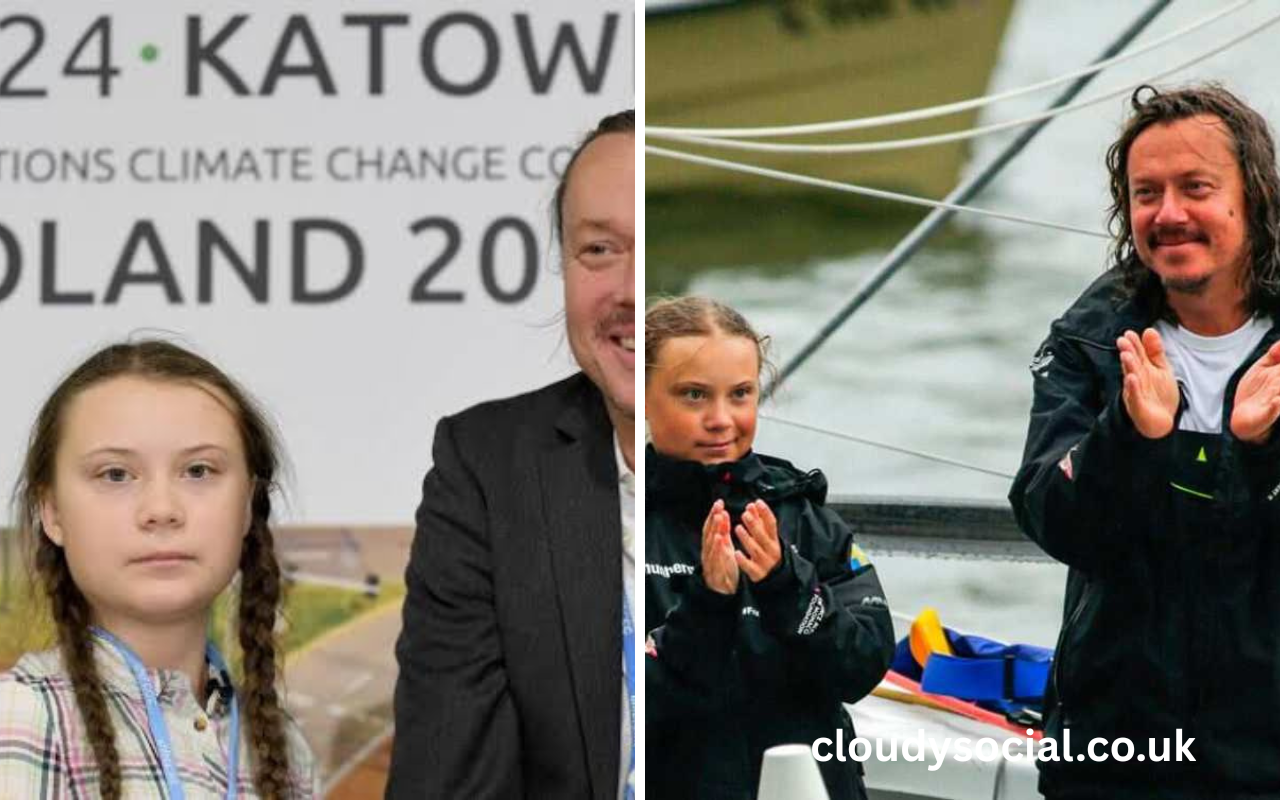
Svante Thunberg is a Swedish actor, producer, and author best known internationally as the father of climate activist Greta Thunberg. Born into a family with deep roots in Swedish theatre and performance, he built his own career in acting before becoming widely recognized due to his daughter’s global environmental activism.
Although he began his professional life in the arts, Svante Thunberg’s public identity has evolved significantly over time. Today, he is often discussed in connection with climate activism, parenting in the public eye, and the widely documented transformation of his family into one of the most recognized environmental families in the world.
His life story blends theatre, family responsibility, mental health awareness, and climate consciousness—making him a unique figure in modern cultural and environmental discussions.
Early Life and Artistic Background
Svante Fritz Vilhelm Thunberg was born on 10 June 1969 in Stockholm, Sweden into a highly artistic family. His father, Olof Thunberg, was a well-known Swedish actor and director, and his mother, Mona Andersson, also worked within the creative arts.
Growing up in this environment meant Svante was surrounded by theatre, storytelling, and performance culture from an early age. His upbringing naturally guided him toward the stage rather than traditional academic or business careers.
Interestingly, his name “Svante” is historically associated with Swedish intellectual heritage, including references to scientific lineage such as Svante Arrhenius, a Nobel Prize-winning chemist. While not directly linked to his immediate career, this cultural association reflects the broader Scandinavian tradition of science and arts intersecting in public life.
Education and Entry into Acting
Svante Thunberg pursued drama studies and was trained in theatre performance before fully entering the professional acting world. Early in his career, he appeared in stage productions, sometimes performing alongside his father.
His training included work connected to Swedish theatre institutions and university-level drama education, particularly in Gothenburg. This formal foundation gave him both classical and modern acting skills, which he later applied in Swedish theatre and television.
Unlike Hollywood-style fame, Svante’s career developed primarily within Sweden’s national theatre ecosystem, where actors often move between stage performances, cultural productions, and television drama.
Acting Career in Swedish Theatre and Television
Early Theatre Work
Svante Thunberg worked with several respected Swedish theatre institutions, including:
- The Royal Dramatic Theatre (Dramaten)
- The National Swedish Touring Theatre (Riksteatern)
- Regional theatre productions across Sweden
His early career was heavily stage-oriented, focusing on classical and contemporary plays. One of his early notable experiences included performing in Shakespearean works, such as A Midsummer Night’s Dream, where he appeared alongside his father.
This period helped establish him as a competent stage actor within Sweden’s cultural landscape.
Television Appearances
In the late 1990s, Svante Thunberg appeared in Swedish television productions. One of his more recognizable roles came in the SVT drama series Skärgårdskdoktorn (1998), a popular Swedish show that reached a broad national audience.
Although he never became a mainstream television celebrity, these appearances contributed to his recognition within Sweden’s entertainment industry.
Transition Away from Acting
As time passed, Svante gradually reduced his acting roles. Instead of pursuing a high-profile entertainment career, he began focusing more on family life and behind-the-scenes creative work.
This shift would later become important when his family life required significant involvement in supporting his daughter Greta’s health and development.
Relationship with Malena Ernman
One of the most defining aspects of Svante Thunberg’s life is his relationship with Swedish opera singer Malena Ernman, a highly respected mezzo-soprano who represented Sweden in the Eurovision Song Contest.
The couple met in the early 2000s during a production-related collaboration. Their relationship developed quickly, and shortly afterward they began building a family together.
They married in 2004 and have two daughters:
- Greta Thunberg (born 2003), climate activist
- Beata Ernman (born 2005), singer and performer
Malena Ernman’s international opera career meant that the family lived a highly mobile artistic life, often traveling across Europe for performances. This created a unique family structure in which Svante often took on a more domestic and logistical role.
Fatherhood and Family Responsibilities
Svante Thunberg’s role as a father became central to his public identity, especially after his daughter Greta developed severe emotional struggles in childhood.
Greta’s Early Mental Health Struggles
Greta Thunberg experienced significant psychological challenges during her early teenage years, including:
- Depression
- Selective mutism (difficulty speaking in certain contexts)
- Eating difficulties
- Anxiety linked to climate change awareness
These struggles deeply affected the entire family and led to a period of crisis in their household.
Parenting Shift and Support Role
During this time, Svante Thunberg took on a more active parenting and caregiving role. He temporarily reduced his professional commitments to focus on his daughters’ well-being.
He has openly described how the family had to completely reorganize their lives to support Greta’s mental health, demonstrating a parenting approach centered on emotional stability and adaptability.
Role in Greta Thunberg’s Climate Activism
Svante Thunberg became globally known when Greta Thunberg began her school strike for climate action in 2018.
Initial Resistance
At first, Svante did not support Greta missing school for activism. He believed education should remain the priority and initially discouraged her protests.
However, as Greta’s activism continued, he gradually became more supportive and involved.
Becoming a Guardian and Support System
As Greta’s movement grew into an international phenomenon, Svante took on the role of:
- Travel companion
- Legal guardian during minor international travel
- Emotional support figure
- Logistics coordinator
Because Greta was underage during the early years of activism, Svante’s presence was essential for safety and organization.
Lifestyle Changes in the Family
The Thunberg family made significant lifestyle adjustments as a result of Greta’s climate awareness, including:
- Reducing or eliminating air travel
- Choosing lower-emission transport options
- Reevaluating consumption habits
- Increasing environmental awareness in daily life
Svante has acknowledged that these changes were initially motivated by supporting Greta but later became part of the family’s broader ethical outlook.
Transatlantic Sailing and Public Attention
One of the most widely reported moments involving Svante Thunberg was when he accompanied Greta on transatlantic voyages aboard sailing vessels such as Malizia II.
These journeys were undertaken to reduce carbon emissions associated with air travel and became symbolic of Greta’s activism.
Svante’s role during these trips was primarily logistical and supportive, ensuring safety and continuity while Greta attended international climate conferences.
“Our House Is on Fire” and Family Memoir
Svante Thunberg is one of the co-authors of the book:
“Our House Is on Fire: Scenes of a Family and a Planet in Crisis”
Originally published as Scenes from the Heart, the book was later updated and republished in 2020.
Structure and Themes
The book combines:
- Personal family struggles
- Greta’s mental health journey
- Climate awareness development
- Emotional and psychological transformation within the family
It is written collectively by:
- Svante Thunberg
- Malena Ernman
- Greta Thunberg
- Beata Ernman
Impact of the Book
The memoir received international attention for its raw and emotional portrayal of:
- Parenting a child with mental health challenges
- The intersection between anxiety and global climate fears
- The transformation of a private family into public figures
It contributed significantly to global discussions about climate anxiety and youth mental health.
Public Image and Media Attention
Svante Thunberg’s public image is closely tied to Greta Thunberg’s global recognition. As a result, he has experienced both support and criticism.
Positive Perception
Supporters view Svante as:
- A dedicated and supportive father
- A parent who adapted to extraordinary circumstances
- A figure promoting awareness of mental health and climate issues
Criticism and Debate
Critics have raised questions about:
- The visibility of the Thunberg family in media
- The intersection of activism and publicity
- The role of parental involvement in Greta’s public image
Despite these debates, Svante himself maintains that his primary motivation has always been family well-being rather than political activism.
Relationship with Greta Thunberg Today
As Greta Thunberg has grown into an independent adult activist, Svante’s role has naturally changed.
Today, their relationship is described as:
- Supportive but less operational
- Respectful of Greta’s independence
- Rooted in early family collaboration during activism development
Svante has emphasized that Greta now operates independently in her activism and no longer requires parental management.
Legacy and Cultural Significance
Svante Thunberg’s legacy extends beyond acting and fatherhood. He represents several broader cultural themes:
In Theatre and Arts
He contributed to Swedish stage and television culture, particularly during the 1990s.
In Parenting and Mental Health Awareness
His family story has become widely discussed in relation to:
- Childhood mental health
- Parenting under public pressure
- Neurodiversity and emotional sensitivity
In Climate Awareness
Through his daughter’s activism and family memoir, he has become indirectly associated with global environmental discussions.
Conclusion
Svante Thunberg is a Swedish actor-turned-public figure whose life changed dramatically due to his daughter Greta Thunberg’s rise as a global climate activist. While his early career was rooted in theatre and television, his later life has been defined by family responsibility, emotional support, and participation in one of the most influential environmental narratives of the modern era.
His story is ultimately one of adaptation—transitioning from performer to parent, from private individual to public figure, and from traditional artistic work to involvement in a global conversation about climate change and mental health.
you may also read : Struggles in New York: The Early Career Phase