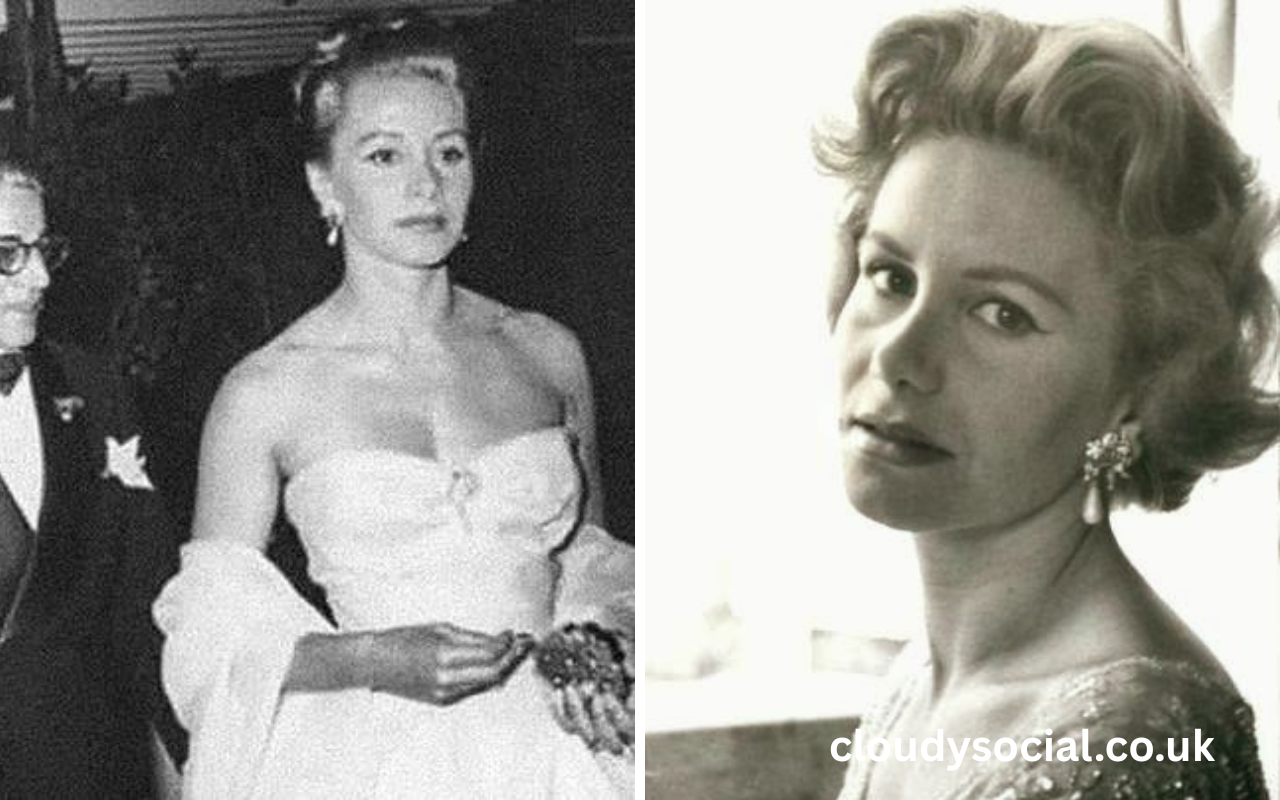
Tina Onassis Niarchos was one of the most fascinating women associated with the legendary Greek shipping dynasties of the twentieth century. Born into immense wealth as Athina Mary “Tina” Livanos, she became internationally known through her marriages to two of the most influential shipping magnates in history: Aristotle Onassis and Stavros Niarchos. Her life combined glamour, privilege, tragedy, romance, and scandal in ways that continue to intrigue historians and biographers decades after her death.
As the daughter of a shipping billionaire, the wife of two rival shipping tycoons, the mother of heirs to one of the world’s greatest fortunes, and the grandmother of Athina Onassis, Tina occupied a unique position in modern social history. While she enjoyed a life filled with luxury yachts, international travel, aristocratic circles, and immense wealth, her personal story was marked by heartbreak, family conflicts, failed marriages, and devastating losses.
Today, Tina Onassis Niarchos remains an important figure in discussions about the Onassis family, the Niarchos dynasty, Greek shipping history, and the elite social circles that dominated Europe during the mid-twentieth century.
Early Life and Family Background
Athina Mary Livanos was born on March 19, 1929, in London, England. She was the daughter of Stavros G. Livanos, one of the wealthiest and most respected Greek shipping magnates of his era. Her mother, Arietta Zafirakis, came from another prominent Greek family.
Growing up, Tina enjoyed an extraordinarily privileged childhood. The Livanos family was among the elite of international shipping, a business that generated vast fortunes during the first half of the twentieth century. The family owned luxurious residences, traveled extensively, and maintained close relationships with influential figures throughout Europe and beyond.
Tina was raised alongside her sister Eugenia Livanos and her brother George Livanos. The siblings grew up in an environment where wealth and social status were deeply intertwined with business interests. Their father was not only one of the richest shipowners in Greece but also a powerful figure whose approval was highly sought after.
The Livanos family occupied a prestigious place in Greek society, and Tina’s future was often viewed through the lens of strategic family alliances and social expectations. Few could have predicted that she would eventually become connected to both Aristotle Onassis and Stavros Niarchos, two men whose rivalry would define an era in global shipping.
Becoming One of Europe’s Most Eligible Heiresses
By the mid-1940s, Tina Livanos had become one of the most desirable young heiresses in Europe. Beautiful, wealthy, and belonging to one of the most powerful shipping families in the world, she attracted considerable attention from ambitious businessmen and aristocrats.
At the time, Greek shipping was experiencing dramatic growth. Among the rising stars of the industry were Aristotle Onassis and Stavros Niarchos. Both men were building maritime empires that would eventually make them legends in international business.
The competition between these two entrepreneurs extended beyond shipping contracts and tanker fleets. They were also competing for social influence, prestige, and access to elite families. Tina Livanos quickly became part of that competition.
Although both men admired her, it was Aristotle Onassis who ultimately secured her father’s approval. Their marriage would change the course of shipping history and establish one of the most famous family dynasties of the twentieth century.
Marriage to Aristotle Onassis
In December 1946, seventeen-year-old Tina Livanos married Aristotle Onassis. The marriage attracted significant public attention because of the substantial age difference between the couple. Onassis was forty years old and already a successful businessman with rapidly expanding international interests.
The union represented more than a romantic relationship. It symbolized the merging of two powerful forces within Greek shipping. For Onassis, marrying into the Livanos family elevated his status among the traditional Greek shipping elite. For the Livanos family, the marriage connected them to one of the industry’s most ambitious entrepreneurs.
During the early years of their marriage, Tina and Aristotle enjoyed a life of extraordinary luxury. They traveled extensively aboard private yachts, attended exclusive social events, and maintained residences in various countries. Their lifestyle reflected the growing wealth and influence of the Onassis empire.
The marriage placed Tina in the international spotlight. She became a familiar figure in high society, admired for her beauty, elegance, and connection to one of the world’s richest men. Newspapers and magazines frequently reported on the couple’s glamorous lifestyle.
Despite their public image, however, the marriage faced increasing challenges as the years passed.
Life as the Wife of a Shipping Billionaire
Being married to Aristotle Onassis meant living in a world few people could imagine. The family moved among elite circles that included royalty, politicians, celebrities, and business leaders.
The Onassis fortune expanded dramatically during the postwar years. Aristotle invested heavily in shipping, oil transportation, and international business ventures. His success transformed him into one of the wealthiest individuals in the world.
Tina participated in a social environment characterized by lavish parties, luxury travel, and constant media attention. Yet the demands of being married to a powerful businessman often came with emotional difficulties.
Aristotle’s relentless focus on business, combined with his increasingly public relationships with other women, gradually strained their marriage. Tina found herself navigating both personal and public challenges while raising their children.
Although the couple enjoyed tremendous financial success, wealth alone could not guarantee happiness.
The Birth of Alexander and Christina Onassis
Tina and Aristotle had two children who would become central figures in the history of the Onassis family.
Their son, Alexander Onassis, was born in 1948. As the only male heir, Alexander was widely expected to inherit and eventually manage the Onassis shipping empire. His future appeared extraordinarily promising.
Two years later, their daughter Christina Onassis was born. Christina would later become one of the richest women in the world and an internationally recognized heiress.
Tina was deeply devoted to her children and played an important role in their upbringing. Despite the demands of high society, she remained committed to her family.
Both children grew up surrounded by wealth and privilege, yet their lives would ultimately be marked by profound personal struggles and tragedy.
The Maria Callas Affair
One of the most dramatic chapters in Tina’s marriage involved Aristotle Onassis’s relationship with world-famous opera singer Maria Callas.
The romance between Onassis and Callas became a major international scandal. As one of the greatest opera performers of her generation, Callas attracted enormous media attention. Her relationship with Onassis generated headlines across Europe and America.
For Tina, the affair represented a painful betrayal. Reports from the period suggest that the marriage had already been experiencing difficulties, but the public nature of the relationship intensified those problems.
The affair became one of the most famous celebrity scandals of the twentieth century. Newspapers followed every development, and public fascination with the love triangle continued for years.
Ultimately, the relationship between Onassis and Callas contributed significantly to the collapse of Tina’s marriage.
Divorce from Aristotle Onassis
In 1960, Tina and Aristotle officially divorced after nearly fourteen years of marriage.
The divorce marked the end of one of the most influential unions in Greek shipping history. While financial arrangements ensured Tina’s continued wealth, the emotional consequences were substantial.
Following the divorce, Aristotle continued his highly publicized relationships, eventually marrying Jacqueline Kennedy in 1968. Tina, meanwhile, sought to rebuild her personal life away from the shadow of her former husband.
Despite the end of their marriage, Tina remained connected to the Onassis dynasty through their children and shared family legacy.
The divorce also marked the beginning of a new chapter in her life.
Marriage into British Aristocracy
In 1961, Tina married John Spencer-Churchill, the Marquess of Blandford and heir to the Duke of Marlborough.
This marriage introduced Tina to British aristocratic society and provided her with a prestigious noble title. She became known as the Marchioness of Blandford, joining one of Britain’s most historic noble families.
The union appeared promising on paper, combining immense wealth with aristocratic prestige. However, the relationship faced numerous challenges.
Despite the social advantages associated with the marriage, it failed to provide lasting happiness. The couple eventually divorced in 1971.
Although brief compared with her other major relationships, this marriage demonstrated Tina’s continued presence within elite international circles.
Marriage to Stavros Niarchos
Perhaps the most remarkable twist in Tina’s life occurred later in 1971 when she married Stavros Niarchos.
Niarchos was not only one of the world’s richest shipowners but also Aristotle Onassis’s greatest business rival. The marriage shocked many observers because of its unusual circumstances.
Even more remarkably, Niarchos had previously been married to Tina’s sister, Eugenia Livanos. Following Eugenia’s death, he eventually married Tina, creating a highly unusual family connection.
This marriage effectively linked the Livanos, Onassis, and Niarchos dynasties in an unprecedented way.
For many historians, Tina’s marriage to Niarchos remains one of the most extraordinary aspects of her biography. Few women in modern history have been married to two men who dominated the same industry and competed so intensely against each other.
The Legendary Onassis-Niarchos Rivalry
To fully understand Tina’s place in history, it is important to appreciate the rivalry between Aristotle Onassis and Stavros Niarchos.
The two men competed fiercely for dominance in international shipping. Their rivalry extended to tanker fleets, business acquisitions, luxury yachts, real estate, and social influence.
Both men became symbols of postwar entrepreneurial success. Their competition attracted widespread media attention and was often compared to modern corporate rivalries between technology or finance giants.
Tina’s marriages placed her at the center of this historic competition. Her relationships with both men created a unique personal connection between two of the most powerful figures in maritime history.
Even decades later, biographies of Onassis and Niarchos frequently discuss Tina’s role in their intertwined stories.
Family Tragedies and Personal Struggles
Although Tina’s life appeared glamorous from the outside, it was marked by recurring tragedy.
Members of the Livanos family experienced numerous personal hardships, including failed marriages, emotional struggles, and untimely deaths. The pressures associated with immense wealth often intensified family conflicts rather than eliminating them.
Public fascination with Tina’s life often overlooked the emotional burden she carried. Behind the glamorous headlines existed a woman coping with disappointment, loss, and family turmoil.
The most devastating tragedy of all would arrive in the early 1970s.
The Death of Alexander Onassis
In January 1973, Tina’s son Alexander Onassis died following an airplane accident.
Alexander was only twenty-four years old and widely regarded as the future leader of the Onassis empire. His death shocked the international business community and devastated his family.
For Tina, the loss was almost unbearable. Alexander had represented not only her beloved son but also the future of the family dynasty.
The tragedy profoundly affected Aristotle Onassis as well. Many historians believe he never fully recovered emotionally from the death of his son.
Alexander’s death remains one of the defining tragedies associated with the Onassis family.
Tina Onassis Niarchos’s Death
Only a year after losing her son, Tina herself died in Paris on October 10, 1974, at the age of forty-five.
Her death generated significant public attention because of the circumstances surrounding it. Official reports cited acute pulmonary edema, though speculation and controversy persisted regarding possible contributing factors.
The timing of her death intensified the sense of tragedy surrounding the Livanos and Onassis families. Within a relatively short period, the family had endured multiple devastating losses.
Tina’s passing marked the end of a life that had been filled with extraordinary privilege but also profound sadness.
She was buried in Switzerland, where members of her family had longstanding connections.
Inheritance and Estate Disputes
Following Tina’s death, questions arose regarding the distribution of her substantial estate.
As a member of several wealthy dynasties, Tina possessed significant assets, including jewelry, property, and financial holdings. Legal disputes emerged concerning aspects of her inheritance.
Christina Onassis eventually became involved in efforts to protect her interests and preserve family assets. These disputes highlighted the complexity of managing fortunes that spanned multiple countries and generations.
The inheritance issues also underscored the enormous scale of wealth associated with the Livanos, Onassis, and Niarchos families.
Connection to Athina Onassis
Today, Tina’s legacy survives most visibly through her granddaughter, Athina Onassis.
Athina is the daughter of Christina Onassis and became the sole surviving heir of the Onassis fortune following Christina’s death in 1988.
As the last direct descendant of Aristotle Onassis and Tina Livanos, Athina carries forward one of the most famous family names in modern business history.
Although she has largely chosen a private life, public interest in the Onassis dynasty remains strong, ensuring continued fascination with Tina’s story.
Tina Onassis Niarchos’s Legacy
Tina Onassis Niarchos occupies a unique position in twentieth-century history. She was simultaneously a Livanos heiress, an Onassis wife, a Niarchos wife, a mother to heirs of a global fortune, and a participant in one of history’s most famous business rivalries.
Her life reflects the extraordinary opportunities and challenges associated with immense wealth. While she enjoyed privileges unavailable to most people, she also experienced personal hardships that money could not prevent.
Biographers continue to study her story because it offers insight into elite society, family dynamics, business empires, and the emotional costs of public life.
More than fifty years after her death, Tina remains a symbol of the glamour, power, and tragedy that defined the golden age of Greek shipping.
Conclusion
The story of Tina Onassis Niarchos is far more than a tale of wealth and privilege. It is a story of family, ambition, love, rivalry, heartbreak, and resilience. Born into one of the world’s richest shipping families, she became linked to two of the industry’s most legendary figures and witnessed some of the most dramatic events in modern social history.
Her life connected three extraordinary dynasties—Livanos, Onassis, and Niarchos—and left a lasting impact on each of them. Though her years were relatively few, her influence continues through the enduring legacy of the Onassis family and the fascination surrounding one of the most remarkable women of the twentieth century.
For historians, business enthusiasts, and admirers of extraordinary biographies, Tina Onassis Niarchos remains an unforgettable figure whose life captured both the brilliance and the tragedy of immense wealth.
you msy also read :Beginning Her Acting Career