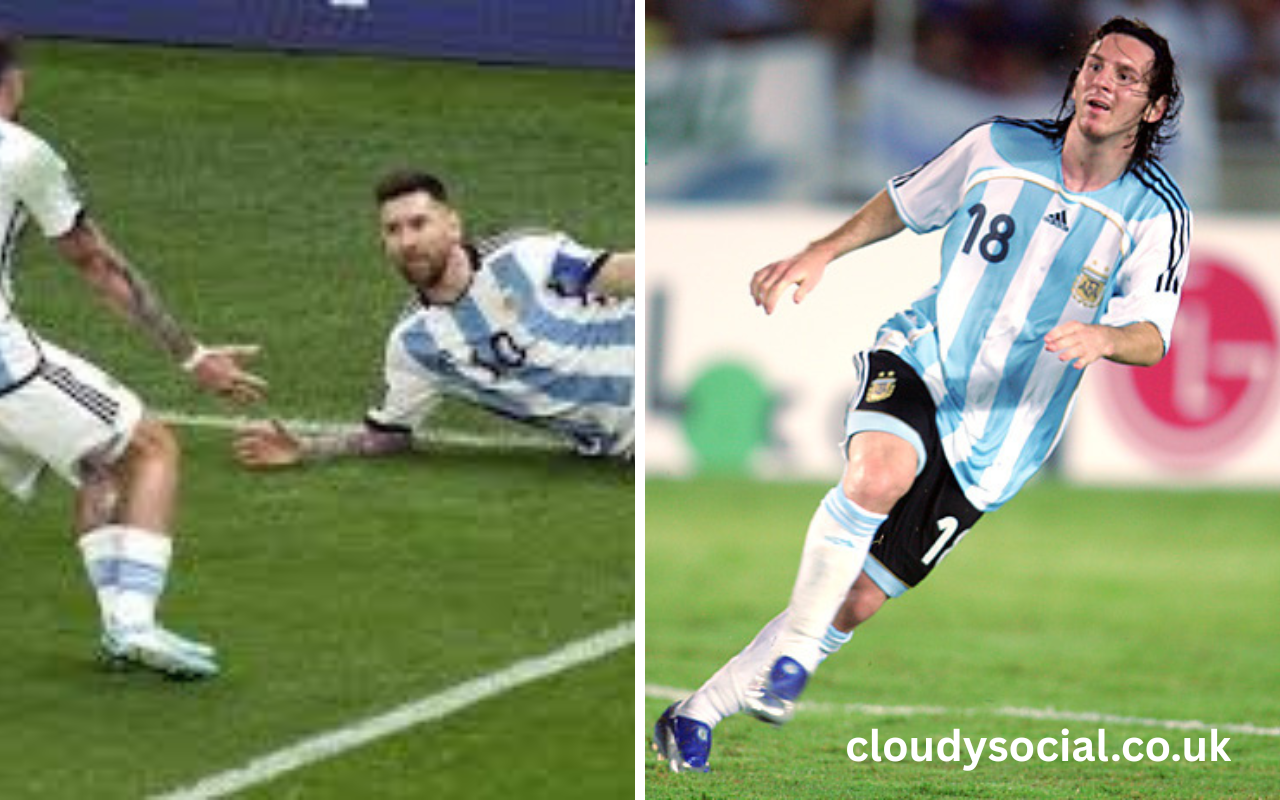
The question “Who is the GOAT of soccer?” is one of the most debated topics in sports history. GOAT stands for “Greatest of All Time,” and football fans around the world have spent decades arguing over which player deserves that title. Every generation has witnessed extraordinary talent, from Pelé dominating the world stage in the 1950s and 1960s to Diego Maradona’s magical performances in the 1980s and the unprecedented dominance of Lionel Messi and Cristiano Ronaldo in the modern era.
Unlike many sports debates, the soccer GOAT discussion is particularly complex because players compete in different eras, under different rules, against different opponents, and with varying levels of tactical sophistication. Some fans prioritize World Cup success. Others focus on individual awards, goals, assists, longevity, or overall influence on the sport. As a result, there is no universally accepted formula for determining the greatest football player ever.
However, when examining statistics, trophies, individual achievements, consistency, longevity, and impact on the game, a clear group of players emerges at the top of football history. Lionel Messi, Cristiano Ronaldo, Pelé, and Diego Maradona are consistently mentioned as the strongest candidates for the title.
This article explores the complete GOAT debate, analyzing every major factor that contributes to greatness and examining why many experts, former players, coaches, and fans increasingly believe Lionel Messi has become the greatest soccer player of all time.
What Does GOAT Mean in Soccer?
The term GOAT refers to the Greatest Of All Time. In football, being the GOAT means more than simply scoring the most goals or winning the most trophies. True greatness is determined through a combination of factors that collectively define a player’s legacy.
A GOAT candidate must demonstrate exceptional skill, consistency, leadership, adaptability, and success at both club and international levels. They must perform under pressure, influence major matches, and maintain elite standards over many years.
Football analysts typically evaluate players based on goals, assists, trophies, Ballon d’Or awards, World Cup performances, longevity, peak performance, and influence on future generations. While statistics play an important role, the eye test also matters. Some players possess a level of creativity, intelligence, and technical brilliance that numbers alone cannot fully capture.
The reason the GOAT debate remains unresolved is that different fans prioritize different criteria. A supporter of Pelé may emphasize World Cups, while a Ronaldo fan may prioritize goal-scoring records. Messi supporters often point to his combination of scoring, playmaking, trophies, and individual accolades.
The Evolution of Football Greatness
Every era of football has produced legendary players. During the early decades of the sport, stars like Alfredo Di Stéfano and Ferenc Puskás set standards that seemed impossible to surpass. Later, Pelé transformed football into a global phenomenon while leading Brazil to multiple World Cup titles.
The 1970s saw the rise of Johan Cruyff, whose influence extended beyond his playing career and fundamentally changed football tactics. The 1980s belonged largely to Diego Maradona, whose extraordinary talent helped Argentina win the 1986 FIFA World Cup.
The modern era has been defined by Lionel Messi and Cristiano Ronaldo. Their rivalry elevated football to unprecedented heights and produced achievements that may never be repeated. For more than fifteen years, both players consistently delivered elite performances while breaking records and collecting trophies.
The evolution of sports science, training methods, nutrition, and tactical systems has also influenced the GOAT discussion. Modern players compete in an environment that is more demanding and competitive than ever before. At the same time, historical legends often played under harsher conditions with less protection from referees and less advanced medical support.
Because of these differences, comparing players across generations remains one of the greatest challenges in sports analysis.
Lionel Messi: The Strongest Modern GOAT Candidate
Lionel Messi’s journey began in Rosario, Argentina, before he joined Barcelona’s famous La Masia academy. From a young age, it became clear that he possessed extraordinary talent.
Messi’s playing style is unique because he combines several elite qualities simultaneously. He is one of the greatest goal scorers in football history, yet he is also one of the greatest playmakers. He can dribble through entire defenses, create scoring opportunities for teammates, deliver precise passes, and finish chances with remarkable efficiency.
Throughout his career, Messi accumulated numerous domestic league titles, Champions League trophies, international championships, and individual awards. He became the player with the most Ballon d’Or awards in history, winning the prestigious honor eight times.
One of the strongest arguments in Messi’s favor is his complete skill set. Many legendary strikers score goals but do not create chances at the same level. Many great playmakers provide assists but do not score consistently. Messi excels in virtually every attacking category.
His vision, balance, close control, and football intelligence have often made him appear unstoppable. Defenders frequently knew exactly what he intended to do but remained unable to stop him.
Perhaps the most significant moment of Messi’s career came during the 2022 FIFA World Cup. For years, critics argued that he could not be considered the GOAT without winning football’s biggest prize. By leading Argentina to World Cup glory and producing one of the greatest tournament performances ever seen, Messi answered that criticism decisively.
The World Cup victory completed an already extraordinary resume and convinced many previously undecided observers that he deserved the title of greatest football player of all time.
Cristiano Ronaldo: The Ultimate Goal Machine
Cristiano Ronaldo represents a different type of greatness. While Messi is often praised for natural genius and creativity, Ronaldo is frequently celebrated as the ultimate example of dedication, discipline, and self-improvement.
Beginning his professional career in Portugal before rising to prominence at Manchester United, Ronaldo transformed himself into one of the most complete forwards football has ever seen.
His physical attributes are extraordinary. He possesses speed, strength, jumping ability, endurance, and athleticism rarely seen in football history. Combined with his relentless work ethic, these qualities enabled him to maintain elite performance levels for nearly two decades.
Ronaldo’s scoring record is among the most impressive in sports. He has scored goals in multiple leagues, competitions, and international tournaments. He succeeded in England, Spain, Italy, and international football, demonstrating an adaptability that few players have ever matched.
Supporters of Ronaldo often argue that his achievements are more impressive because he succeeded in multiple environments. While Messi spent most of his prime years at Barcelona, Ronaldo consistently proved himself across different leagues and tactical systems.
Ronaldo’s influence extends beyond statistics. His professionalism, fitness standards, and commitment to excellence inspired countless young athletes worldwide. He became one of the most recognizable athletes on the planet and helped elevate football’s global popularity.
Although the absence of a World Cup title is often cited against him in the GOAT debate, Ronaldo’s overall achievements ensure that he remains firmly in the conversation.
Pelé: The Original King of Football
Before Messi and Ronaldo, there was Pelé.
For many older fans and football historians, Pelé remains the greatest player who ever lived. His impact on football transcended statistics and trophies.
Pelé emerged as a teenage sensation and quickly became the face of Brazilian football. His combination of technical skill, creativity, athleticism, and finishing ability allowed him to dominate opponents throughout his career.
What separates Pelé from many other legends is his success on football’s biggest stage. He won three FIFA World Cups with Brazil, a feat unmatched by any other superstar player. His performances helped establish Brazil as the most iconic national team in football history.
Pelé’s influence also extended beyond the field. At a time when television was bringing sports to global audiences, he became football’s first true international superstar. Millions of people around the world fell in love with football because of Pelé.
Supporters of Pelé argue that modern players benefit from better pitches, superior equipment, advanced sports science, and greater financial resources. They believe Pelé achieved greatness under more challenging conditions and therefore deserves special recognition.
While statistical comparisons across eras are difficult, Pelé’s achievements remain remarkable and ensure his place among football’s greatest legends.
Diego Maradona: The Most Magical Footballer Ever?
If Pelé represents sustained excellence and global influence, Diego Maradona represents pure football genius.
Many experts believe Maradona possessed the highest natural talent ever seen on a football pitch. His ability to dribble, create chances, control matches, and inspire teammates made him one of the most captivating athletes in sports history.
Maradona’s defining moment came during the 1986 FIFA World Cup. His performances throughout the tournament remain legendary. He led Argentina to the championship while producing moments that continue to be discussed decades later.
The famous “Goal of the Century” against England showcased every aspect of his brilliance. Picking up the ball in his own half, Maradona dribbled past multiple defenders before scoring one of football’s most iconic goals.
What makes Maradona unique in the GOAT debate is the extent to which he carried teams. While many legends played alongside numerous world-class teammates, Maradona often appeared capable of changing matches almost single-handedly.
Although his career contained controversies and personal struggles, his influence on football remains enormous. For many fans, Maradona’s peak level of performance may never be surpassed.
Messi vs Ronaldo: The Defining Rivalry of Modern Football
No discussion about the GOAT can avoid the rivalry between Lionel Messi and Cristiano Ronaldo.
For more than fifteen years, football fans witnessed a level of sustained excellence never seen before. Both players consistently scored goals, won trophies, and claimed individual awards while pushing each other to new heights.
The rivalry was especially intense during their years in Spain, where Messi represented Barcelona and Ronaldo starred for Real Madrid. Every El Clásico became a global event, attracting hundreds of millions of viewers.
Messi and Ronaldo approached the game differently. Messi relied on creativity, vision, dribbling, and natural talent. Ronaldo emphasized athleticism, movement, finishing, and relentless determination.
Both approaches produced extraordinary results.
The rivalry transformed football by raising expectations for elite players. Seasons with forty or fifty goals became normal. Winning major trophies was no longer enough; players were expected to break records continually.
While Ronaldo’s achievements remain astonishing, Messi’s World Cup victory, greater number of Ballon d’Or awards, and broader playmaking contributions have led many analysts to place him slightly ahead.
Why the World Cup Matters So Much
The FIFA World Cup occupies a unique place in football culture. Unlike club competitions, it represents national pride and occurs only once every four years.
Many fans believe the greatest player ever should succeed on football’s biggest international stage.
Pelé won three World Cups. Maradona led Argentina to victory in 1986. Messi finally achieved his World Cup dream in 2022.
For years, the lack of a World Cup title was the primary argument used against Messi. Once Argentina lifted the trophy in Qatar, that criticism largely disappeared.
Although club football now features higher overall quality and greater tactical sophistication, the World Cup remains the most prestigious competition in the sport. Success in the tournament often shapes how players are remembered by future generations.
Ballon d’Or Awards and Individual Recognition
The Ballon d’Or is football’s most prestigious individual award. Winning the trophy indicates that a player was considered the best in the world during a particular season.
Messi’s record eight Ballon d’Or awards provide one of the strongest statistical arguments in his favor. Ronaldo’s five awards also reflect extraordinary excellence.
Individual awards are not perfect measures of greatness, but they offer valuable insight into how players were perceived during their careers. Consistently winning such honors demonstrates sustained dominance over peers.
The fact that Messi and Ronaldo collectively dominated the Ballon d’Or for more than a decade illustrates how far above the rest of the football world they stood during their prime years.
The Importance of Longevity
One season of brilliance does not create a GOAT.
True greatness requires sustained excellence over many years. This is where Messi and Ronaldo separate themselves from most players in football history.
Both athletes maintained elite standards for nearly two decades. They adapted to changing tactics, aging bodies, and evolving competition while continuing to perform at the highest level.
Longevity is particularly important because it demonstrates consistency. A player who dominates for fifteen years has proven their greatness repeatedly under different circumstances.
Few athletes in any sport have matched the combination of longevity and excellence displayed by Messi and Ronaldo.
Influence Beyond the Game
The greatest players do more than win matches. They shape the future of the sport.
Pelé helped popularize football globally. Maradona inspired generations of creative players. Ronaldo revolutionized fitness standards and professionalism. Messi demonstrated the power of intelligence, technique, and teamwork.
Each of these legends changed how football is played, taught, and understood.
Their influence extends beyond statistics and trophies. Young players study their movements, imitate their skills, and dream of achieving similar success.
This cultural impact is an essential component of true greatness.
Final Verdict: Who Is the GOAT of Soccer?
After analyzing every major factor—goals, assists, trophies, World Cup success, Ballon d’Or awards, longevity, influence, and overall ability—the strongest modern case belongs to Lionel Messi.
His career combines virtually everything that football fans value. He has won the World Cup, captured a record number of Ballon d’Or awards, scored hundreds of goals, provided countless assists, and maintained excellence for nearly two decades.
Cristiano Ronaldo remains one of the greatest athletes and goal scorers in sports history. Pelé’s World Cup achievements and global influence remain extraordinary. Maradona’s peak brilliance continues to inspire awe.
However, when considering the complete picture, Messi’s blend of individual skill, team success, consistency, creativity, and achievement places him at the top of football history.
you may also read :Public Relationship and Marriage to Jane Lynch